

Teprotumumab (brand name Tepezza) is a monoclonal antibody that blocks the insulin-like growth factor-1 receptor (IGF-1R). It's the first medication specifically approved for thyroid eye disease (TED) and can reduce proptosis (bulging eyes) and inflammation.
Official website: tepezza.com
Key takeaways
- First FDA-approved drug specifically for TED
- Reduces proptosis (bulging eyes) and inflammation
- Given as IV infusion over 8 sessions
- Approved for TED regardless of activity or duration; suitability depends on symptoms and treatment goals
- Can cause fetal harm; pregnancy prevention is required
- Hearing monitoring is important before, during, and after treatment
- Expensive; insurance coverage may be needed
Questions about your diagnosis? Contact our office
Visual guide: Teprotumumab: treatment with a safety plan
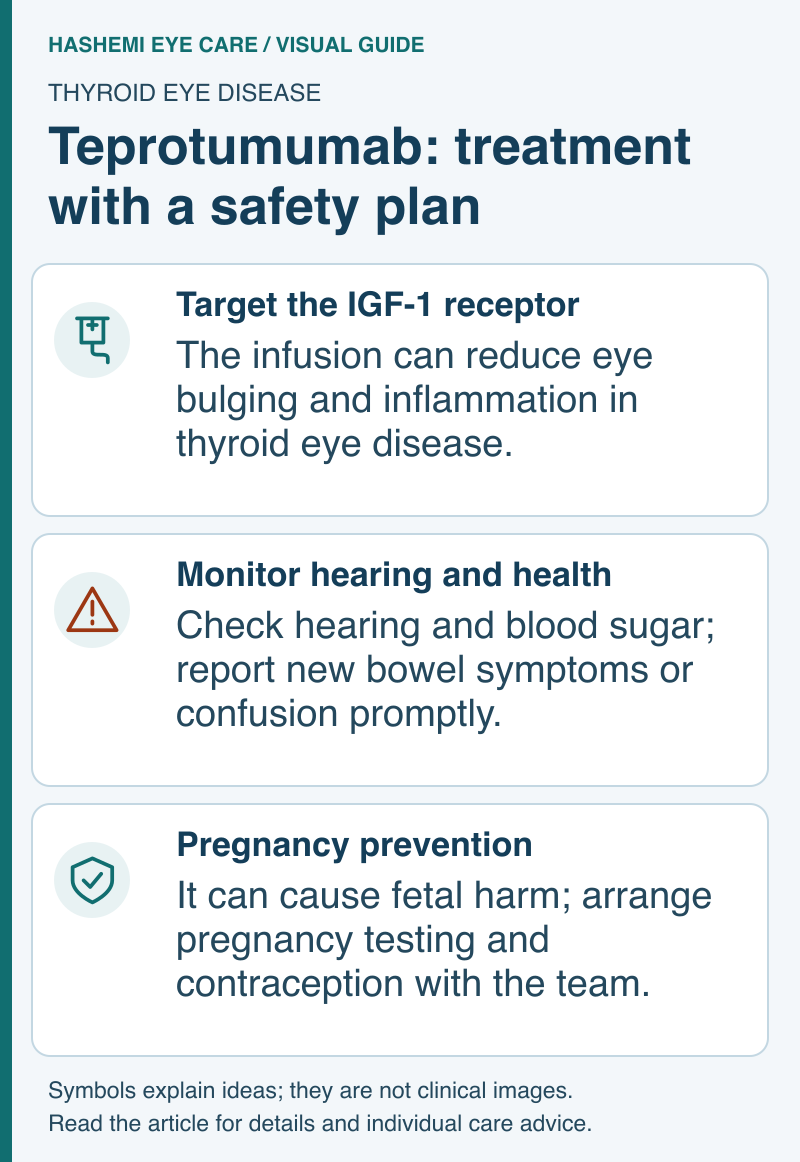
Read this visual as text
How It Works
In thyroid eye disease, antibodies that cause Graves' disease also activate the IGF-1 receptor in orbital tissue, leading to inflammation and tissue expansion. Teprotumumab blocks this receptor, reducing inflammation and allowing the eye to return toward normal position.
Common Uses
- Thyroid eye disease regardless of activity or duration under the U.S. label; an individual specialist assessment determines whether expected benefits justify the risks
- Reduces proptosis, double vision, and inflammation
For comprehensive information about managing TED, including when teprotumumab is appropriate, the surgical rehabilitation pathway, and why smoking cessation is critical, see our guide: Thyroid Eye Disease - Active Treatment and Rehabilitation Guide.
Administration
- 8 IV infusions, every 3 weeks; the last dose is usually 21 weeks after the first
- Infusions every 3 weeks
- Given in infusion center
- First two infusions take at least 90 minutes; later infusions may be shortened to at least 60 minutes if well tolerated
Expected Benefits
- Reduction in proptosis (eye bulging): average 2 to 3 mm
- Improvement in double vision
- Reduction in orbital inflammation
- May reduce need for surgery
Side Effects
Common
- Muscle spasms or cramps
- Nausea
- Hair loss (usually temporary)
- Diarrhea
- Fatigue
- Dry skin
Serious
- Hearing problems, including severe hearing impairment or hearing loss that may be permanent
- Elevated blood sugar
- Infusion reactions
- Worsening inflammatory bowel disease (IBD), including diarrhea, abdominal pain, rectal bleeding, or bowel urgency
Important Considerations
Hearing changes: Teprotumumab may cause severe hearing impairment, including hearing loss that may be permanent. Hearing should be assessed before, during, and after treatment. Report hearing loss, muffled hearing, tinnitus, ear pressure, or increased sound sensitivity immediately.
Pregnancy prevention: Teprotumumab can cause fetal harm and should not be used during pregnancy. Patients who can become pregnant need pregnancy testing before starting and effective contraception before treatment, during treatment, and for at least 6 months after the final infusion.
Inflammatory bowel disease: Teprotumumab may worsen IBD and postmarketing reports include bowel perforation and IBD flares, including in patients without a prior IBD diagnosis. Tell your clinician before treatment if you have Crohn disease, ulcerative colitis, chronic diarrhea, rectal bleeding, or unexplained abdominal pain.
Changes in thinking or alertness: The September 2026 U.S. label includes an encephalopathy warning. Seek urgent medical assessment for new confusion or a marked change in alertness and tell the infusion team. Clinicians may interrupt or discontinue treatment while evaluating the cause.
Before Starting
- Hearing assessment recommended before, during, and after treatment
- Blood sugar monitoring (especially diabetics)
- Pregnancy testing and contraception planning if pregnancy is possible
- Review of any history of inflammatory bowel disease or chronic gastrointestinal symptoms
Cost Considerations
Teprotumumab is expensive. Most patients require insurance approval, and manufacturer assistance programs may help with costs.
Breastfeeding
There are no adequate human milk, infant-effect, or milk-production data for teprotumumab. Discuss breastfeeding with the treating team before the first infusion so the need for treatment and potential infant risk can be assessed.
Frequently Asked Questions
Will my eyes go back to normal?
Teprotumumab reduces proptosis significantly in most patients, but eyes may not return completely to pre-disease appearance. Additional surgery may still be needed in some cases.
Does it help double vision?
Yes, many patients see improvement in double vision, likely due to reduced muscle inflammation and improved alignment.
What happens after the 8 infusions?
Many patients have lasting improvement. Some may experience recurrence and need additional treatment. Long-term data is still being collected.
References
- U.S. Food and Drug Administration. TEPEZZA (teprotumumab-trbw) prescribing information.
- DailyMed. TEPEZZA (teprotumumab-trbw) prescribing information.
- TEPEZZA. Important Safety Information.
Medical Disclaimer: This information is for educational purposes only and does not replace professional medical advice.