

Brimonidine (brand name Alphagan) is a selective alpha-2 adrenergic agonist eye drop used to lower intraocular pressure (IOP) in patients with open-angle glaucoma or ocular hypertension. It reduces eye pressure. A separate vision-protective effect independent of pressure lowering remains uncertain.
Key takeaways
- Lowers eye pressure by reducing fluid production and increasing outflow
- U.S. Alphagan P label: three times daily; follow your own prescription
- Pressure lowering is the established treatment role; additional neuroprotection is unproven
- Common side effects include eye redness, dry mouth, and drowsiness
- Available as generic and in combination drops (Simbrinza)
Questions about your diagnosis? Contact our office
How It Works
Brimonidine lowers intraocular pressure through two mechanisms:
- Reduces aqueous humor production: decreases the amount of fluid the eye makes
- Increases uveoscleral outflow: enhances fluid drainage through an alternative pathway
The Low-Pressure Glaucoma Treatment Study suggested a possible visual-field benefit beyond measured pressure reduction, but more brimonidine patients discontinued because of adverse effects. This does not establish neuroprotection for every patient or replace pressure and visual-field follow-up.
Common Uses
- Primary open-angle glaucoma
- Ocular hypertension
- As adjunctive therapy with other glaucoma drops
- Acute angle-closure glaucoma: as part of emergency treatment
- Prevention of IOP spikes after laser procedures
- Available in combination with brinzolamide as Simbrinza
How to Use
- Dosing: The U.S. Alphagan P monotherapy label directs one drop three times daily, approximately eight hours apart; your clinician may prescribe a different schedule
- Formulation: Alphagan P is a solution; combination suspension products such as Simbrinza have their own instructions
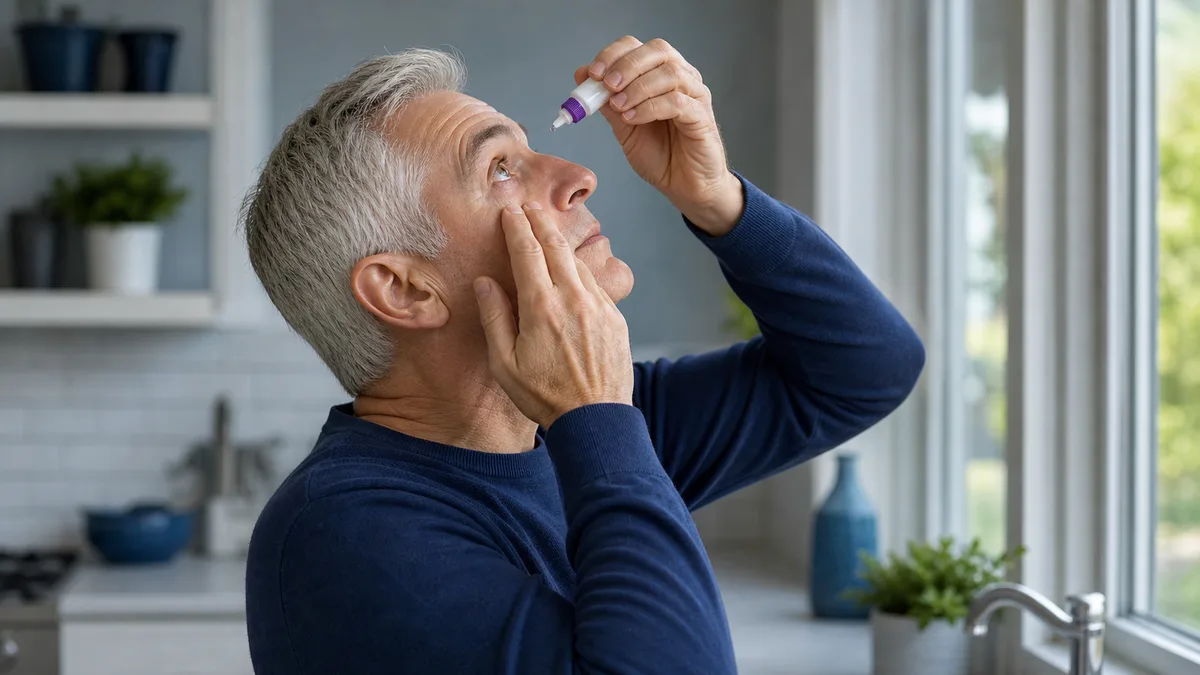
- Instillation: Wash hands, tilt head back, pull down lower eyelid, apply drop
- After instillation: Close eyes for 1-2 minutes; press on inner corner of eye to reduce systemic absorption and dry mouth
- Contact lenses: Remove before use; wait 15 minutes before reinserting
- Multiple drops: Wait at least 5 minutes between different eye medications
What to Expect
Pressure Reduction
- Typically lowers IOP by 4-6 mmHg
- Effect begins within 1-2 hours
- Peak effect at approximately 2-3 hours
- Duration approximately 8-12 hours
Initial Experience
- May notice mild eye redness
- Dry mouth is common initially
- Some drowsiness possible
- Effects often improve with continued use
Side Effects
Common
- Eye redness or irritation
- Dry mouth: from systemic absorption
- Drowsiness or fatigue
- Blurred vision (temporary)
- Burning or stinging upon instillation
Less Common
- Allergic reaction: can develop even after months of use
- Increased redness, itching, swelling
- Occurs in approximately 10-15% of patients
- May require discontinuation
- Headache
- Dizziness
- Dry nose
- Taste changes
Important: Allergic Reaction
Brimonidine allergy is relatively common and can develop even after using the drop without problems for months. Signs include:
- Worsening eye redness (not improving)
- Eyelid swelling and itching
- Follicular conjunctivitis
If you develop these symptoms, contact your doctor; the medication may need to be switched.
Precautions
- Children: Contraindicated in children under 2; use cautiously in older children because of CNS depression risk (drowsiness, lethargy, respiratory depression)
- MAO inhibitors: Tell the prescriber; the U.S. label advises caution because low-blood-pressure effects may increase
- Cardiovascular disease: Use with caution
- Raynaud's phenomenon: May worsen symptoms
- Depression: Monitor for mood changes
- Driving/machinery: May cause drowsiness-use caution
- Pregnancy/breastfeeding: Discuss with the prescriber. Because serious effects in a nursing infant are possible, the label calls for a clinician-guided decision about treatment versus breastfeeding
How to Judge Whether the Plan Is Working
Ask for your target pressure and next pressure-check date. Bring the actual bottles and describe missed doses, drowsiness, or new itching/redness; these can change whether the regimen is effective and tolerable. A pressure number alone does not replace optic nerve and visual field monitoring.
Frequently Asked Questions
Why do I get dry mouth from an eye drop?
Eye drops can drain through the tear ducts into the nose and throat, where they're absorbed into the bloodstream. Brimonidine causes dry mouth through this systemic absorption. Pressing on the inner corner of your eye after instillation helps reduce this.
Can I develop an allergy to brimonidine over time?
Yes, this is relatively common. Allergic reactions to brimonidine can develop weeks to months after starting the medication, even if you tolerated it initially. Watch for increasing redness, itching, or eyelid swelling.
Is brimonidine safe for children?
Brimonidine is contraindicated in children under 2 and should be used cautiously in older children because it can cause serious drowsiness, lethargy, and even respiratory depression. Pediatric glaucoma treatment should be directed by a specialist.
Can I use brimonidine with other glaucoma drops?
Yes, brimonidine is commonly used in combination with other glaucoma medications, including prostaglandins and beta-blockers. Wait at least 5 minutes between different eye drops.
How long will I need to use brimonidine?
Glaucoma is typically a lifelong condition requiring ongoing treatment. If brimonidine is working well and tolerated, it's usually continued indefinitely. Never stop glaucoma medications without consulting your doctor.
What if brimonidine causes too much drowsiness?
Lower-concentration formulations (brimonidine 0.1%) may cause less drowsiness than older formulations (0.2%). Discuss with your doctor-alternative medications or combinations may be available.
References
- DailyMed. Alphagan P (brimonidine tartrate) prescribing information.
- Krupin T, et al. Low-Pressure Glaucoma Treatment Study: brimonidine versus timolol. Am J Ophthalmol. 2011;151(4): 671-681.
Medical Disclaimer: This information is for educational purposes only and does not replace professional medical advice. Follow your doctor's instructions regarding this medication.