

Most headaches are not caused by eye disease. Still, there is important overlap: migraine can cause visual symptoms, eye strain can add a dull brow ache, and a few headache patterns point to problems that need urgent neuro-ophthalmic or neurological evaluation.
Key takeaways
- Most headaches are not caused by the eyes, though eye strain can contribute
- Migraine often lives in the visual system; aura, blur, and light sensitivity are common
- Headache plus vision changes should be taken seriously
- Thunderclap onset, progressive worsening, fever, neurological signs, or new headache after age 50 are red flags
Questions about your diagnosis? Contact our office
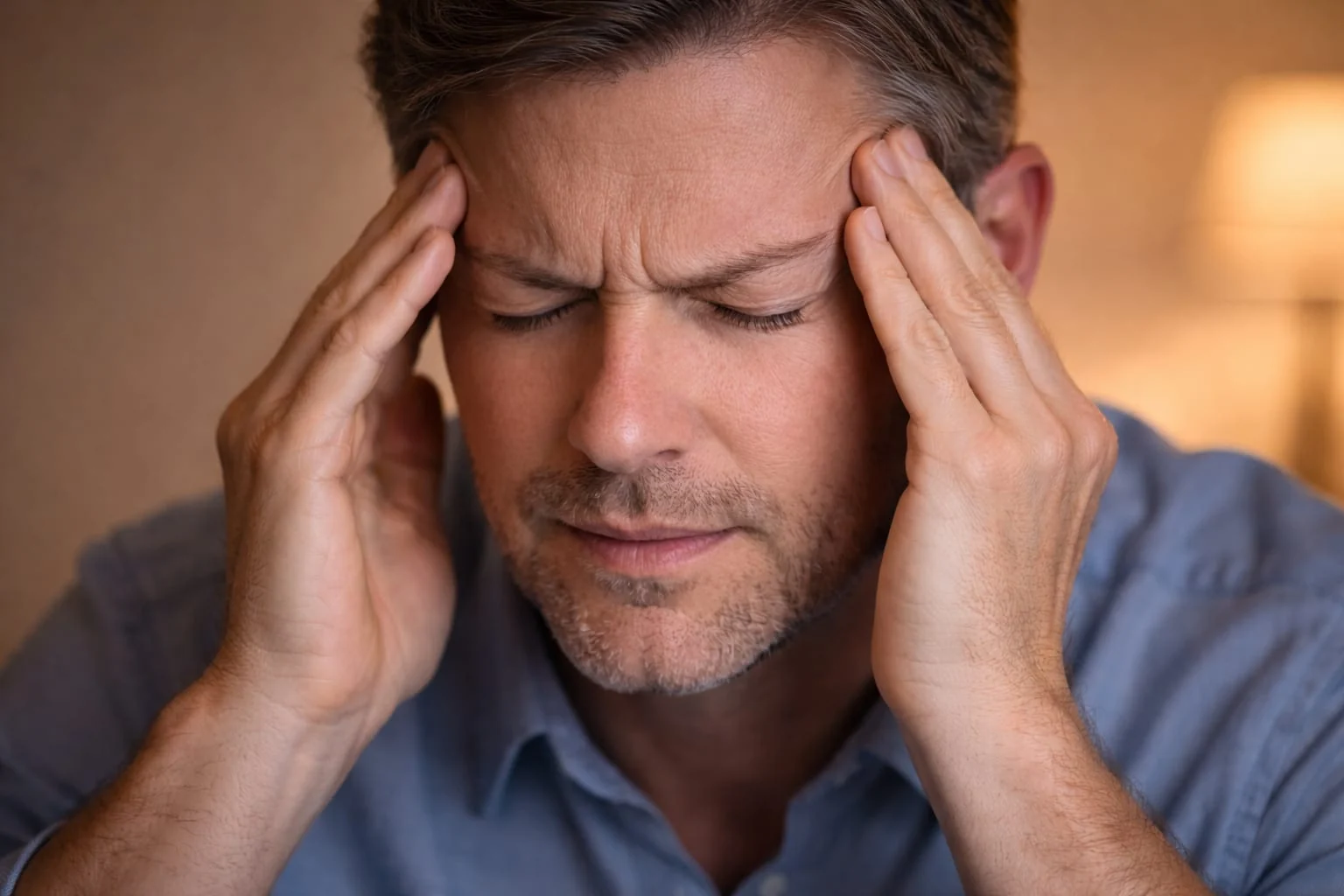
Headache Types Relevant to Neuro-Ophthalmology
Migraine
Migraine commonly involves the visual system:
- Occurs before or during headache in ~25% of migraineurs
- Scintillating zigzag lines
- Expanding blind spots (scotoma)
- Shimmering or kaleidoscope effects
- Usually lasts 5-60 minutes
During the headache
- Photophobia (light sensitivity): very common
- Blurred vision
- Eye pain
- May have visual snow or afterimages
Raised Intracranial Pressure
Idiopathic intracranial hypertension (IIH)
- Headache, often daily and throbbing
- Worse with straining, coughing, bending
- Visual symptoms: transient dimming, double vision
- Pulsatile tinnitus (whooshing in ears)
- Papilledema on exam
Other causes of elevated pressure
- Brain tumors
- Venous sinus thrombosis
- Meningitis
Giant Cell Arteritis
- New headache in patients over 50
- Temple tenderness
- Scalp pain (hurts to brush hair)
- Jaw claudication (pain with chewing)
- Vision loss risk-medical emergency
- See Giant Cell Arteritis
Cluster Headache
- Severe, stabbing pain around eye
- Same side every time
- Eye tearing, redness, nasal congestion
- Droopy eyelid during attack
- Occurs in clusters over weeks/months
Eye-Related Headaches
- Severe eye pain with headache
- Nausea, vomiting
- Blurred vision, halos
- Medical emergency
Eye strain
- Frontal headache or around eyes
- Related to prolonged visual tasks
Uncorrected refractive error
- Need for glasses causing strain headaches
- Usually frontal or around eyes
- Related to visual effort
Warning Signs (Red Flags)
Call 911 now for headache with:
- Sudden "thunderclap" onset (worst headache of life) - possible subarachnoid hemorrhage
- Vision loss or visual symptoms that don't fit migraine
- Fever and stiff neck - possible meningitis
- Weakness, numbness, or speech difficulty - possible stroke
- Confusion or altered consciousness
- Headache after head trauma
Do not drive yourself. Remember BE-FAST: sudden Balance loss, Eye changes, Face drooping, Arm weakness, Speech difficulty, Time to call 911. One sign is enough, even if it goes away.
For a focused emergency checklist, see sudden severe headache with vision change - could this be a stroke?.
Same-day ER for age over 50 with new headache PLUS any of the following - possible giant cell arteritis:
- Jaw pain when chewing (jaw claudication)
- Scalp tenderness (especially over the temples)
- Brief loss of vision in one eye that comes and goes
- New unexplained shoulder or hip stiffness
Untreated giant cell arteritis can cause irreversible blindness within 24-48 hours. The ER should obtain ESR and CRP and start high-dose steroids before biopsy if GCA is suspected. See giant cell arteritis.
Urgent (same-day) evaluation for:
- New headache that wakens you from sleep
- Progressively worsening headaches over days to weeks
- Headache with new neurological symptoms
- Worst headache pattern of your life that doesn't fit your usual headaches
When Headache Needs Eye Evaluation
See a neuro-ophthalmologist if you have:
- Headache with visual symptoms that don't fit typical migraine aura
- Persistent visual changes between headaches
- Headache with double vision
- New headache with any vision concerns
- Papilledema found on eye exam
- Headache not responding to usual treatment
Evaluation of Concerning Headaches
Eye Examination
- Visual acuity: checking for vision loss
- Pupil examination: nerve function
- Visual field testing: may show blind spot enlargement
- Dilated fundus exam: checking for papilledema
Neurological Examination
- Cranial nerve testing
- Motor and sensory exam
- Balance and coordination
Imaging
- MRI brain: looking for tumors, structural problems
- MRV (venous imaging): checking for venous sinus thrombosis
- CT scan: for acute headache, ruling out bleeding
Other Tests
- Lumbar puncture: measuring pressure, checking for infection
- Blood tests: ESR, CRP for giant cell arteritis
Treatment Approaches
Treatment depends on what kind of headache this actually is:
For Migraine
- Acute treatment: triptans, NSAIDs, gepants
- Preventive medication: if frequent
- Lifestyle modifications: sleep, triggers, stress
For Idiopathic Intracranial Hypertension
- Weight loss: if overweight
- Acetazolamide: reduces CSF production
- Shunt surgery: if medical management fails
- Focus on protecting vision
For Giant Cell Arteritis
- Immediate high-dose steroids
- Long-term steroid-sparing treatment
- Vision protection is priority
For Eye Strain Headaches
- Correct refractive error
- Ergonomic adjustments
- 20-20-20 rule
Frequently Asked Questions
Can eye problems cause headaches?
Yes, but less often than people think. Uncorrected glasses, eye strain, acute glaucoma, and eye inflammation can cause head pain. Most headaches, though, are primary headache disorders such as migraine or tension-type headache.
Do I need my eyes checked for my headaches?
If your headaches are typical tension-type or migraine without unusual features, an eye exam may help if you have eye strain but isn't always necessary. However, if you have visual symptoms with headaches, new or unusual headache patterns, or red flag symptoms, an eye evaluation is important.
Is migraine aura dangerous?
Typical migraine aura (lasting 5-60 minutes, visual positive phenomena like zigzag lines) is generally not dangerous, though migraine with aura does carry slightly increased vascular risk. Atypical aura (longer duration, motor symptoms, unusual features) needs evaluation.
Can migraine cause permanent vision damage?
Typical migraine aura is reversible. Persistent visual loss, a new one-eye blackout or a changed symptom pattern needs assessment for another cause rather than an assumption of migraine. Call 911 for sudden loss or a blackout, even if it resolves.
Why do my headaches cause light sensitivity?
Photophobia is very common with migraine and involves both peripheral (eye) and central (brain) mechanisms. Light activates pain pathways during migraine. Some migraineurs have baseline light sensitivity even between attacks.
References
- American Stroke Association. Stroke Symptoms and B.E. F.A.S.T. Warning Signs.
- National Institute of Neurological Disorders and Stroke. Cerebral Aneurysms.
- American Migraine Foundation. Migraine and Visual Symptoms.
- International Headache Society. ICHD-3: Migraine with aura.
- Cleveland Clinic. Ocular Migraine.
Medical Disclaimer: This information is for educational purposes only and does not replace professional medical advice, diagnosis, or treatment. If you have concerns about headaches or any symptoms, please consult a qualified healthcare provider.