
Gabapentin and memantine are sometimes prescribed off-label for acquired nystagmus, especially acquired pendular nystagmus. Small trials suggest that some patients have less visual motion or better vision. The choice depends on the eye-movement pattern, underlying condition, kidney function, and side effects. Gabapentin is also used for neuropathic pain.
Key takeaways
- Used for nystagmus treatment
- Gabapentin also used for neuropathic pain
- Usually assessed as individual treatment options; combination treatment needs specialist direction
- Dosing requires gradual increase
- Generally well-tolerated
Questions about your diagnosis? Contact our office
Visual guide: Gabapentin or memantine for nystagmus
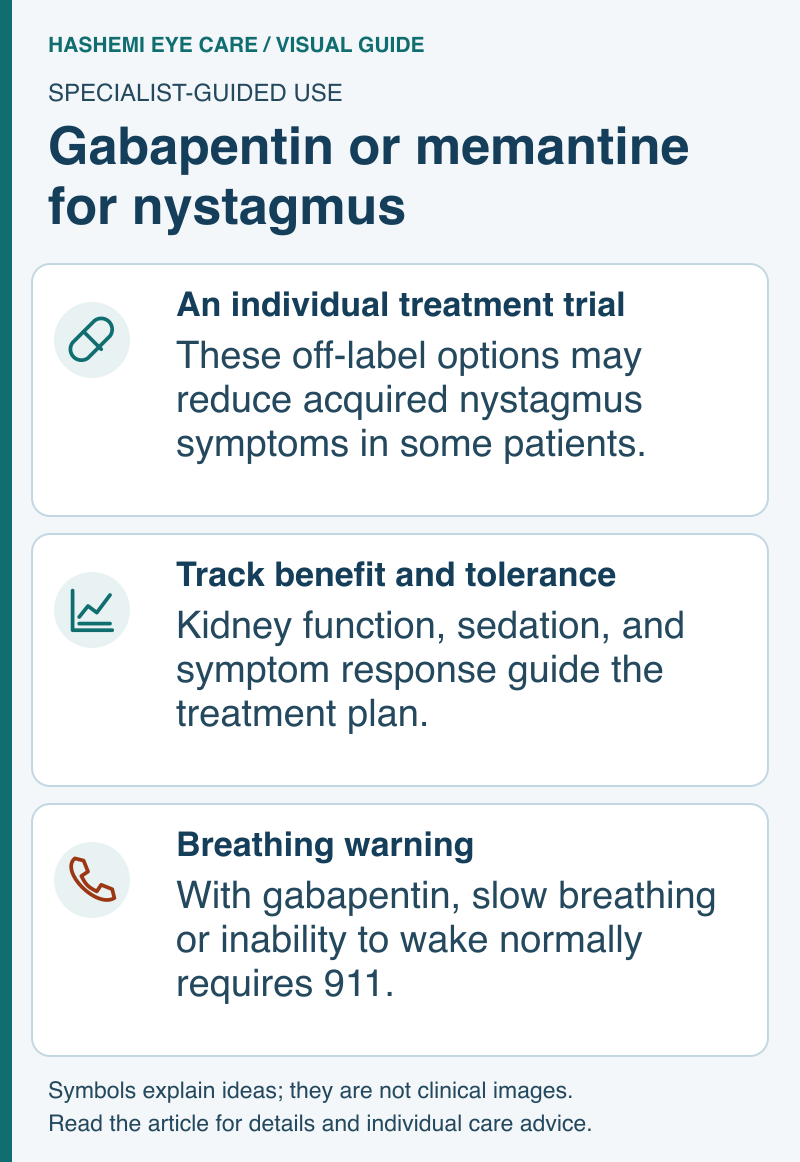
Read this visual as text
Gabapentin
How It Works
Gabapentin modulates calcium channels in the nervous system, reducing abnormal nerve signaling.
Uses in Neuro-Ophthalmology
- Acquired pendular nystagmus
- Neuropathic pain
- Oscillopsia
- Superior oblique myokymia
Dosing
- Start low (100-300mg at bedtime)
- Increase gradually
- A small nystagmus crossover trial used 1,200 mg total per day, divided into doses
- Your specialist chooses the target; kidney impairment requires a lower dose or different interval
Side Effects
- Drowsiness
- Dizziness
- Swelling of legs
- Weight gain
- Fatigue
Memantine
How It Works
Memantine is an NMDA receptor antagonist, modulating glutamate activity in the brain.
Uses in Neuro-Ophthalmology
- Acquired pendular nystagmus
- May be considered when the nystagmus pattern and response support its use
- Some evidence for downbeat nystagmus
Dosing
- The immediate-release U.S. Alzheimer's label starts at 5 mg daily, increasing no faster than weekly to 10 mg twice daily
- A small nystagmus trial used 40 mg/day; that exceeds the labeled Alzheimer's dose and requires explicit specialist supervision
- Severe kidney impairment (CrCl 5-29 mL/min) limits the labeled immediate-release target to 5 mg twice daily
Side Effects
- Dizziness
- Headache
- Confusion (especially in elderly)
- Constipation
Combination Therapy
The small crossover trial compared gabapentin and memantine separately. It does not establish a routine combined regimen. Ask which medicine is being trialed, what improvement to track, and when it will be reviewed.
Monitoring
- Kidney function (both drugs cleared by kidneys)
- Watch for excess sedation
- Monitor for effectiveness
Important Safety and Pregnancy Questions
Gabapentin can cause dangerous breathing suppression with opioids, other sedating medicines, or underlying breathing problems. Call 911 for slow or difficult breathing or if someone cannot be awakened normally. Review alcohol, sleep medicines, and pain medicines with the prescriber.
Discuss pregnancy plans and breastfeeding before treatment. Gabapentin enters breast milk; memantine has limited human pregnancy data and no adequate human milk data. The decision should account for symptoms, alternatives, and infant risk.
Frequently Asked Questions
How quickly will these help my nystagmus?
Effects may be seen within days to weeks, though optimal dosing may take longer to achieve. Not all patients respond, and the degree of improvement varies.
Can I drive while taking these?
Both medications can cause drowsiness and dizziness, especially initially. Don't drive until you know how the medication affects you. Discuss with your doctor.
Are these habit-forming?
Gabapentin can cause dependence and withdrawal symptoms. Do not stop it suddenly; your prescriber should give a taper if it is no longer needed. Memantine is not generally associated with dependence. If several memantine doses have been missed, ask before restarting the old dose.
References
- Thurtell MJ, et al. Crossover trial of gabapentin and memantine as treatment for acquired nystagmus. Ann Neurol. 2010;67: 676-680.
- DailyMed. Gabapentin prescribing information.
- DailyMed. Memantine immediate-release tablets prescribing information.
Medical Disclaimer: This information is for educational purposes only and does not replace professional medical advice.