

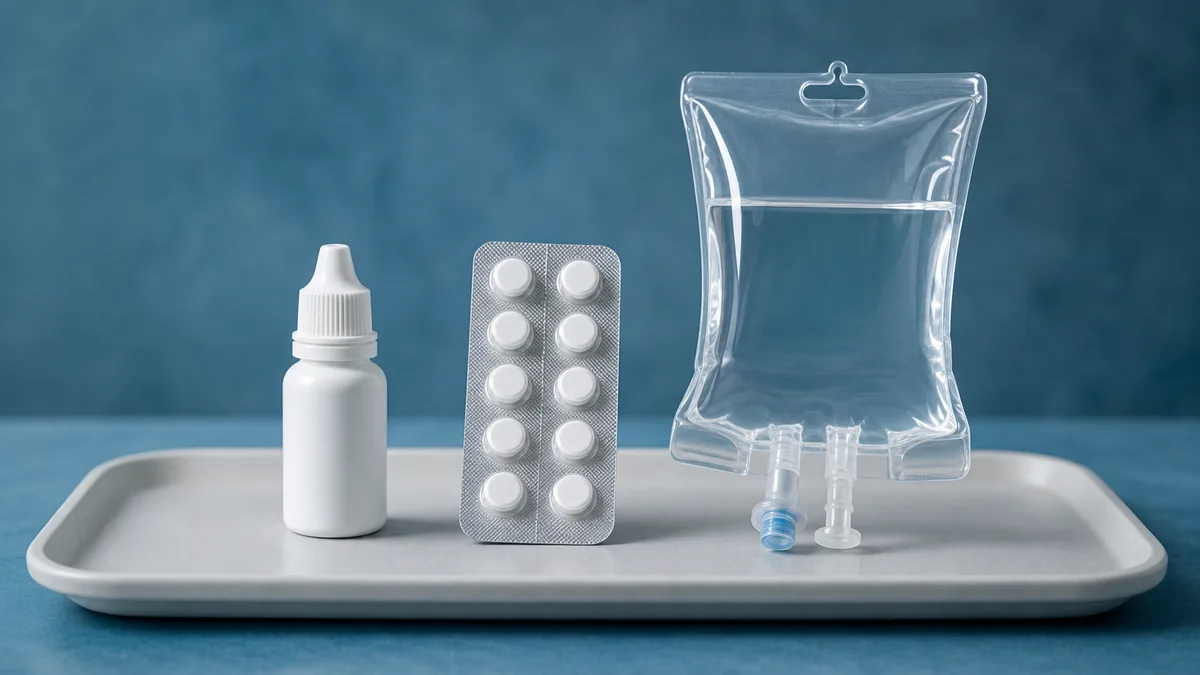
Corticosteroids (often just called "steroids") are powerful anti-inflammatory medications widely used in ophthalmology and neurology. They work by suppressing the immune system's inflammatory response.
Key takeaways
- Powerful anti-inflammatory medications
- Many forms: IV, oral, eye drops, injections
- Rapid effect on inflammation
- Side effects increase with dose and duration
- Tapering often required when stopping
Questions about your diagnosis? Contact our office
Types of Corticosteroids
Systemic (Whole Body)
Oral
- Prednisone: most common oral steroid
- Dexamethasone
- Prednisolone
Intravenous
- Methylprednisolone (Solu-Medrol)
- Used for severe inflammation
- See IV Steroids
Ophthalmic (Eye)
Eye drops
- Prednisolone acetate
- Dexamethasone
- Loteprednol
- Difluprednate
Injections
- Periocular (around the eye)
- Intravitreal (inside the eye)
Common Uses in Neuro-Ophthalmology
Optic Neuritis
- IV steroids speed recovery
- Optic neuritis treatment
- High-dose pulse therapy typical
Giant Cell Arteritis
- High-dose steroids urgently
- Prevents blindness in other eye
- See Giant Cell Arteritis
Thyroid Eye Disease
- Active inflammatory phase
- IV steroids often preferred
- See Thyroid Eye Disease
Myasthenia Gravis
- Part of treatment regimen
- Often combined with other immunosuppressants
- See Myasthenia Gravis
Other Conditions
- Optic perineuritis
- NMO attacks
- Inflammatory orbital disease
- Uveitis
How They Work
Corticosteroids:
- Enter cells and bind to receptors
- Alter gene expression
- Reduce production of inflammatory chemicals
- Suppress immune cell activity
- Decrease swelling and redness
Dosing
High-Dose IV Pulse
- Methylprednisolone 1000mg daily for 3-5 days
- Used for acute severe inflammation
- Usually followed by oral taper
Moderate-High Oral Dose
- Prednisone 40-80mg daily
- Gradually tapered over weeks to months
- Typical for conditions requiring prolonged treatment
Low-Dose Maintenance
- Prednisone 5-10mg daily
- Long-term for chronic conditions
- Goal is lowest effective dose
Eye Drops
- Frequency varies by condition
- May be hourly initially for severe inflammation
- Gradually tapered
Side Effects
Short-Term (More Common)
- Increased appetite and weight gain
- Mood changes, insomnia
- Elevated blood sugar
- Fluid retention
- Increased blood pressure
Long-Term (With Prolonged Use)
- Osteoporosis (bone thinning)
- Cataracts
- Glaucoma
- Adrenal suppression
- Easy bruising
- Skin thinning
- Increased infection risk
- Weight gain (central obesity)
- Muscle weakness
Eye-Specific (Drops or Systemic)
- Increased eye pressure (glaucoma)
- Cataract formation
- Delayed wound healing
- Increased infection risk
Tapering
Why Tapering Is Necessary
Long-term steroid use suppresses your body's natural cortisol production. Stopping suddenly can cause:
- Fatigue
- Weakness
- Low blood pressure
- Adrenal crisis (rarely, dangerous)
How to Taper
- Gradual dose reduction over weeks to months
- Slower taper for longer treatment courses
- Follow your doctor's specific instructions
- Never stop abruptly without medical guidance
For practical advice on managing side effects and the tapering process, see living with steroid treatment.
Monitoring
During Treatment
- Blood pressure
- Blood sugar
- Weight
- Eye pressure (if on eye drops or long-term systemic)
- Bone density (DEXA scan for long-term use)
- Signs of infection
Preventive Measures
For prolonged use:
- Calcium and vitamin D supplementation
- Consider bone-protective medication
- Regular eye exams
- Diabetes screening
- Review vaccinations before prolonged systemic treatment; live-vaccine restrictions depend on the dose, duration, and other immunosuppression
Interactions
- Diabetes medications (may need adjustment)
- Blood thinners
- NSAIDs (increased GI risk)
- Live vaccines may need to be deferred with immunosuppressive systemic doses; eye drops alone do not usually require deferral
- Many other medications-inform all your doctors
Special Considerations
Pregnancy and Breastfeeding
Review the exact steroid, route, dose, and duration with the prescribing and obstetric teams. Systemic corticosteroids can enter breast milk; prolonged high doses need an infant-risk assessment. Do not abruptly stop a prescribed systemic steroid when pregnancy is discovered: the underlying inflammation and adrenal suppression also need a safe plan.
Diabetes
- Steroids raise blood sugar
- May need medication adjustment
- More frequent monitoring needed
Prior Infections
- Can reactivate tuberculosis, hepatitis
- Screening may be needed before starting
Using Steroid Eye Drops Safely
An eye examination should establish why a steroid is needed. Steroids can worsen active epithelial herpes simplex keratitis and other infections; do not use leftover drops for an unexplained red eye. Ask for an eye-pressure monitoring plan, particularly when treatment lasts 10 days or longer, and follow the product-specific stop or taper instructions.
Seek prompt eye care for worsening pain, light sensitivity, redness, or reduced vision during treatment. A pressure rise may have no symptoms, so feeling better does not replace scheduled checks.
Frequently Asked Questions
Are these the same as anabolic steroids?
No. Corticosteroids are anti-inflammatory medications. Anabolic steroids are muscle-building hormones sometimes abused by athletes. Different drugs with different purposes.
Why do I feel so much better on steroids?
Steroids rapidly reduce inflammation and can also cause euphoria. This is why it's important to taper slowly-both to avoid adrenal insufficiency and to prevent symptom rebound.
Can I take steroids long-term?
Sometimes necessary, but goal is usually to use the lowest dose for the shortest time. Long-term use increases side effect risk.
What if I miss a dose?
Take it as soon as you remember, unless it's almost time for your next dose. Don't double up. Call your doctor if you're unsure.
References
- DailyMed. Lotemax ophthalmic suspension prescribing information: infection and eye-pressure precautions.
- DailyMed. Prednisone prescribing information: lactation.
- Centers for Disease Control and Prevention. Vaccination and altered immunocompetence.
Medical Disclaimer: This information is for educational purposes only and does not replace professional medical advice, diagnosis, or treatment.