

Blepharitis is a common and chronic inflammatory condition affecting the eyelids, particularly at the base of the eyelashes. It is usually manageable but can be uncomfortable and is often associated with dry eye syndrome. If you've been experiencing dry or irritated eyes and aren't sure of the cause, blepharitis is one of the most common contributors.
Key takeaways
- Chronic inflammation of the eyelid margins causing irritation and redness
- Two main types: anterior (front of eyelid) and posterior (meibomian gland dysfunction)
- Usually limited to the eyelid margins and does not spread from person to person
- Usually needs ongoing control with consistent lid hygiene and cause-specific treatment
- Often coexists with dry eye and may worsen dry eye symptoms
If lid care is not enough, a dry-eye and MGD evaluation can look for the causes keeping symptoms active.
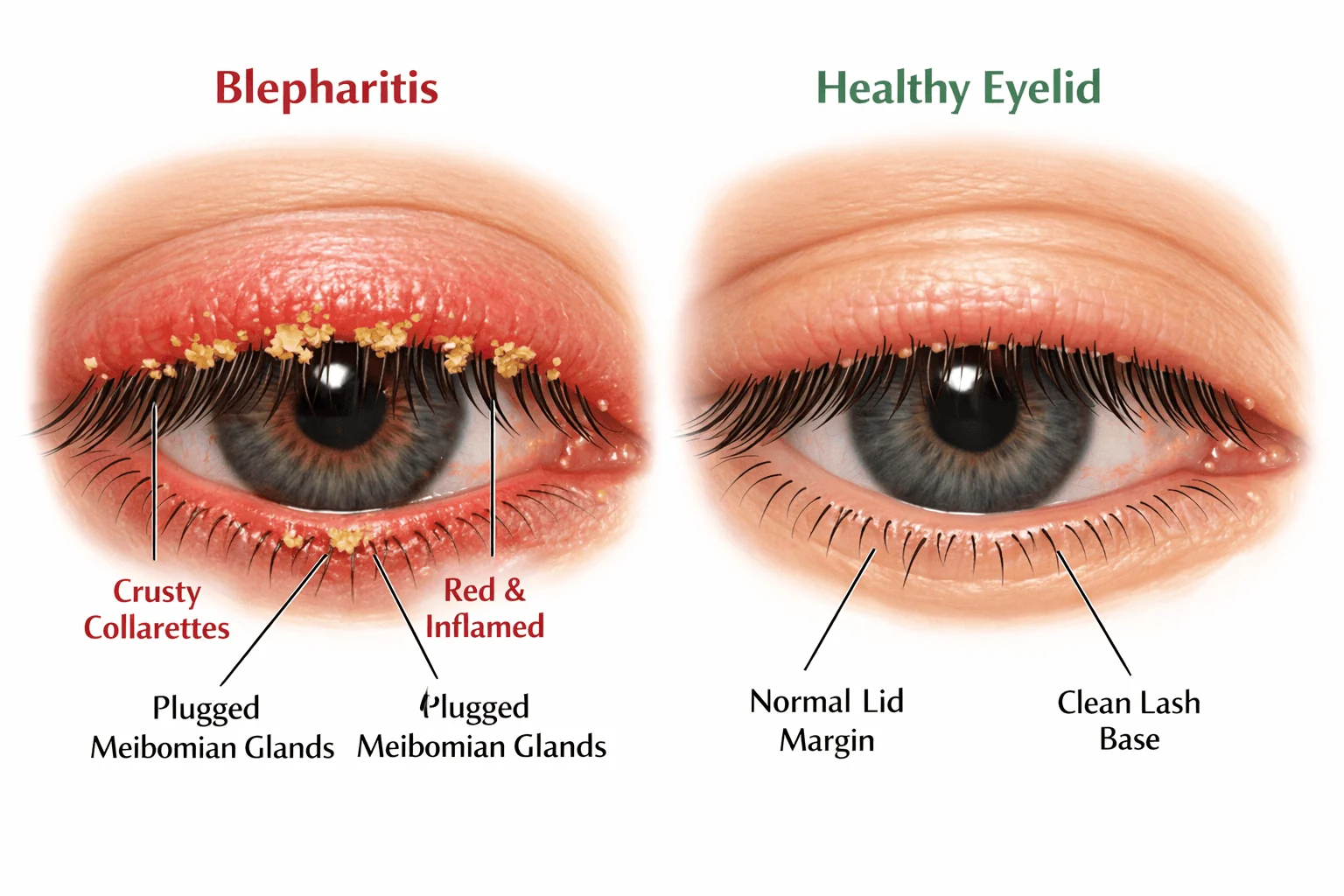
Crusty Eyelids and Eyelashes: Is It Blepharitis?
Crusty eyelids or eyelashes on waking are a common sign of blepharitis. Flakes, scales, or sleeve-like collars usually collect where the lashes enter the eyelid, and the lid margins may also feel itchy, gritty, or burning.
The type of debris can help guide the exam. Greasy flakes may accompany seborrheic dermatitis, firm crusts can occur with bacterial overgrowth, and cylindrical collarettes around individual lashes raise concern for Demodex mites. Thick pus-like discharge, an eye sealed shut by discharge, marked one-sided swelling, eye pain, or reduced vision can point to another problem and should be evaluated promptly.
Types of Blepharitis
Anterior Blepharitis
Affects the outside front of the eyelid where eyelashes attach:
Staphylococcal blepharitis:
- Caused by Staphylococcus bacteria
- Crusty, scaly debris at lash bases
- May cause lash loss or misdirected lashes
Seborrheic blepharitis:
- Associated with seborrheic dermatitis
- Greasy, waxy scales on lid margins
- Often affects eyebrows and scalp too
Posterior Blepharitis
Affects the inner eyelid (meibomian gland dysfunction/MGD):
- Meibomian glands produce abnormal or insufficient oils
- Leads to tear film instability
- Strong association with dry eye syndrome
- May be associated with rosacea
Mixed Blepharitis
- Combination of anterior and posterior types
- Very common in practice
Symptoms
- Red, swollen eyelid margins
- Itching or burning sensation
- Gritty or foreign body sensation
- Crusting at the base of eyelashes (especially upon waking)
- Flaky skin around the eyes
- Sticky eyelids in the morning
- Watery or dry eyes
- Light sensitivity
- Blurred vision that improves with blinking
- Frothy tears
Causes and Associated Conditions
Common Causes
- Bacterial overgrowth on lid margins
- Sebaceous gland dysfunction
- Demodex mites (small mites living in hair follicles)
- Allergies
Associated Conditions
- Rosacea: skin condition causing facial redness
- Seborrheic dermatitis: dandruff
- Dry eye syndrome
- Chalazion and stye (hordeolum)
- Conjunctivitis
Complications
If untreated or poorly managed:
- Stye (hordeolum): painful infected gland
- Chalazion: blocked meibomian gland cyst
- Chronic red eye
- Corneal damage from chronic irritation (rare)
- Eyelash abnormalities, including loss or trichiasis (misdirected lashes)
- Worsening dry eye
How Blepharitis Is Diagnosed
Clinical Examination
- Slit-lamp examination of:
- Eyelid margins
- Eyelash bases
- Meibomian gland openings
- Tear film
- Cornea for any damage
Assessment
- Looking for crusting, redness, telangiectasia (dilated vessels)
- Evaluating meibomian gland secretions
- Checking for Demodex (cylindrical dandruff at lash base)
Blepharitis Treatment
Blepharitis treatment starts with regular eyelid cleaning and then targets the pattern found on examination. Anterior crusting, posterior gland blockage, Demodex collarettes, rosacea, and associated dry eye may each require a different combination of care.
Eyelid Hygiene (Foundation of Treatment)
Daily routine:
-
Warm compresses (5-10 minutes)
- Softens meibomian gland secretions
- Use warm, moist washcloth or commercial eye mask
- Reheat as needed to maintain warmth
-
Lid massage
- After warm compress
- Gently massage eyelids toward lash line
- Helps express meibomian gland contents
-
- Clean lid margins with:
- Commercial lid wipes
- Diluted baby shampoo on cotton swab
- Hypochlorous acid spray
- Clean at base of lashes
- Do both upper and lower lids
- Clean lid margins with:
Medications
For bacterial component:
- Erythromycin ointment applied to lid margins
- Tobradex (tobramycin/dexamethasone): for lid infections with significant inflammation
- Antibiotic drops (short-term)
- Oral doxycycline: anti-inflammatory effect for MGD
For inflammation:
- A short course of a clinician-selected steroid drop or ointment
- Loteprednol or an antibiotic-steroid combination in selected cases
Steroid eye medicines require eye-clinician supervision because they can raise eye pressure, accelerate cataract formation, and worsen herpes simplex keratitis. Use them for the prescribed duration, attend pressure checks when advised, and request an examination before any refill.
For Demodex:
- Xdemvy (lotilaner ophthalmic solution 0.25%), an FDA-approved prescription treatment for Demodex blepharitis in adults, dosed as one drop in each eye twice daily for six weeks
- Clinician-directed lid cleaning or in-office removal of collarettes when helpful
- Carefully selected lid products; tea tree oil formulations can irritate the eyes and eyelid skin
For associated dry eye:
- Artificial tears
- Prescription dry eye medications if needed
If you've been newly diagnosed with dry eye alongside blepharitis, see just diagnosed with dry eye - what now? for a complete treatment approach.
In-Office Treatments
For meibomian gland dysfunction:
- Meibomian gland expression
- LipiFlow thermal pulsation
- Intense pulsed light (IPL)
- BlephEx (mechanical debridement)
When Crusty Eyelids Need Prompt Care
Arrange a prompt eye examination for increasing pain, significant light sensitivity, persistent blurred vision, heavy discharge, recurrent styes, lash loss, or symptoms that continue despite consistent lid care. Fever, rapidly spreading eyelid redness, pain with eye movement, a bulging eye, or reduced vision needs same-day emergency assessment.
Chronic Blepharitis: Long-Term Management
Chronic blepharitis often improves and then flares again because skin bacteria, meibomian gland dysfunction, rosacea, seborrheic dermatitis, or Demodex can persist. A maintenance routine is usually lighter than flare treatment, and periodic eye examinations help confirm that the diagnosis and treatment still fit.
Daily Maintenance
- Continue lid hygiene even when symptoms improve
- Warm compresses at least once daily
- Lid cleaning as recommended
Flare Prevention
- Identify and avoid triggers
- Maintain consistent routine
- Don't skip lid hygiene when feeling well
- Treat associated conditions (rosacea, dry eye)
Environmental Factors
- Humidifier in dry environments
- Avoid excessive eye makeup
- Replace eye makeup regularly
- Remove all makeup before bed
- Don't share eye makeup or tools
Frequently Asked Questions
Is blepharitis contagious?
No, blepharitis is not contagious. It's related to individual factors like bacteria, gland function, and skin conditions, not infection spread from person to person.
Can blepharitis be cured?
Blepharitis is typically a chronic condition that responds well to consistent management. Most people need ongoing lid hygiene, and the intensity of the routine can often be reduced once symptoms improve.
How long until I see improvement?
With consistent lid hygiene, most people notice improvement within 2-4 weeks. However, maintaining the routine is essential-symptoms often return if treatment stops.
Can I wear contact lenses with blepharitis?
Contact lens wear can be challenging with blepharitis. Managing blepharitis first is important. Some people can wear contacts comfortably once blepharitis is controlled; daily disposables are often better tolerated.
Does blepharitis cause permanent damage?
Typically no. While blepharitis can be uncomfortable and chronic, it rarely causes permanent damage to vision when properly managed. Severe, untreated cases can occasionally cause corneal problems.
Should I stop wearing eye makeup?
You don't need to stop completely, but:
- Remove all makeup before bed
- Replace mascara and eyeliner every 3 months
- Avoid waterproof formulas (harder to remove)
- Avoid applying liner inside the lash line
- Consider taking breaks from makeup during flares
References
- American Academy of Ophthalmology. Blepharitis.
- Putnam CM. Diagnosis and management of blepharitis: an optometrist's perspective. Clin Optom. 2016;8:71-78.
- Lindsley K, et al. Interventions for chronic blepharitis. Cochrane Database Syst Rev. 2012.
- Amescua G, et al. Blepharitis Preferred Practice Pattern. Ophthalmology. 2019;126(1):P56-P93.
- National Eye Institute. Blepharitis.
- U.S. Food and Drug Administration. Drug Trials Snapshot: Xdemvy.
Medical Disclaimer: This information is for educational purposes only and does not replace professional medical advice, diagnosis, or treatment. If you have concerns about blepharitis or any eye symptoms, please consult a qualified healthcare provider.