

An antibiotic eye ointment can be useful when bacteria are causing an infection on the eye surface or eyelid. The diagnosis matters. A medication that is reasonable for routine bacterial conjunctivitis may be inadequate for a painful red eye in a contact lens wearer.
If you are looking for the best eye ointment for an eye infection, start with the location and likely cause of the infection. Those details guide the choice more reliably than a familiar brand name.
Read the tube before it goes near your eye. A product intended for the eye should say ophthalmic and sterile. Regular Neosporin and other skin antibiotic ointments are labeled for external use and should stay out of the eye.
Visual guide: Using antibiotic eye ointment safely
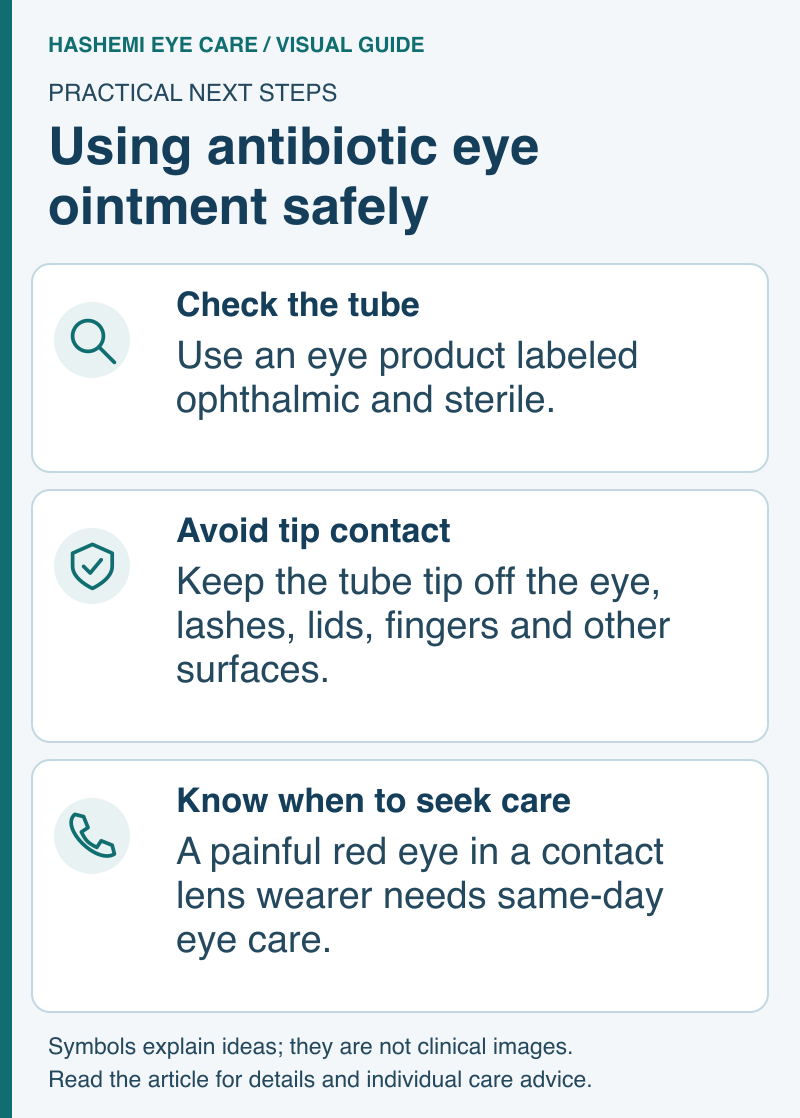
Read this visual as text
What Does Antibiotic Eye Ointment Treat?
These ointments are prescribed for selected bacterial problems involving the conjunctiva, corneal surface, eyelids, or nearby tissues. Common situations include bacterial conjunctivitis, blepharitis, and infection prevention while some corneal abrasions heal. An eye doctor may also use ointment along the eyelid margin when a stye is draining or chronic eyelid disease is contributing.
Each situation has limits. Warm compresses are usually more important than antibiotic ointment for an uncomplicated stye. A suspected corneal ulcer needs an eye examination and often a more intensive drop regimen. Redness caused by allergies, dryness, or a virus calls for a different plan.
Does Pink Eye Need an Antibiotic Ointment?
Pink eye means inflammation of the conjunctiva. Viruses, bacteria, and allergies can all cause it, and the symptoms overlap.
Thick discharge and eyelids that stick together can point toward bacterial conjunctivitis. Watery discharge during a cold is more typical of a viral infection, while strong itching in both eyes often suggests allergy. These clues help, although they cannot always establish the cause on their own.
Antibiotic ointment may shorten some bacterial infections. Mild bacterial pink eye can also clear without it. Viral pink eye does not improve with antibiotics, and allergy treatment focuses on controlling the allergic response. An examination becomes more important when the diagnosis is uncertain or the symptoms are more severe than ordinary conjunctivitis.
Why Choose Ointment Instead of Eye Drops?
Ointment stays on the eye longer because it is thick. That can be useful at bedtime, along the eyelid margin, or for a child who has trouble holding still for a precisely placed drop. The same thickness temporarily blurs vision and can leave the lashes feeling greasy.
Drops clear more quickly and are usually easier to use during the day. They also come in a wider range of antibiotic formulations. A clinician may choose drops when the cornea is involved, when contact lens wear changes the likely bacteria, or when frequent daytime treatment is needed.
| Question | Ointment | Drops |
|---|---|---|
| How long does it stay on the surface? | Longer contact time | Clears more quickly |
| What happens to vision? | Temporary blur is expected | Usually less blur |
| When is it convenient? | Bedtime, eyelid margins, some children | Daytime use and frequent schedules |
| Are the medicines interchangeable? | No. Available drugs and uses differ | No. The prescription depends on the infection |
Common Antibiotic Eye Ointments
Erythromycin Ophthalmic Ointment 0.5%
Erythromycin ophthalmic ointment is a common option for uncomplicated bacterial conjunctivitis and other superficial infections caused by susceptible bacteria. Clinicians also use it along the eyelid margins for selected cases of blepharitis and after some corneal abrasions. It is the ointment routinely used in newborns soon after birth to prevent certain severe neonatal eye infections.
Erythromycin has gaps in bacterial coverage, so another medicine may fit better when resistant bacteria, gram-negative organisms, contact lens wear, or corneal infection is a concern.
Bacitracin and Bacitracin-Polymyxin B
Bacitracin ophthalmic ointment has traditionally been used for susceptible bacteria on the eyelids and eye surface. Adding polymyxin B broadens the combination's activity against several gram-negative bacteria. Current prescriptions may be labeled bacitracin zinc and polymyxin B sulfate ophthalmic ointment; some people know this type of product by the Polysporin name.
Brand names and pharmacy availability vary. Check the active ingredients and confirm that the specific tube is an ophthalmic product.
Tobramycin Ophthalmic Ointment 0.3%
Tobramycin, sold as Tobrex and as generic products, is an aminoglycoside antibiotic with activity against a range of gram-positive and gram-negative eye pathogens. A clinician may select it when the suspected bacteria make that coverage useful. Local irritation or an allergic reaction can occur, as with other topical antibiotics.
A Useful Name Check: Polytrim Is a Drop
Polytrim contains polymyxin B and trimethoprim. It is an ophthalmic solution, so it comes out of the bottle as a drop. It should not be confused with bacitracin-polymyxin B ophthalmic ointment.
Combination products containing an antibiotic and a steroid are another category. For example, Tobradex contains tobramycin and dexamethasone. Steroids can worsen epithelial herpes simplex infection and can raise eye pressure. These combinations need an eye examination, a monitoring plan, and a new review before refilling or reusing leftovers.
How an Eye Doctor Chooses
The appearance of the eye is only one part of the decision. A clinician also considers whether the cornea is involved, whether you wear contact lenses, your medication allergies, previous antibiotic exposure, and how quickly the problem is progressing.
Here is how those details change the plan in practice:
- A child with sticky bacterial discharge may receive an ointment because it remains on the eye and can be easier for a caregiver to apply.
- An adult with chronic crusting at the lashes may need lid hygiene and treatment for blepharitis, with antibiotic ointment used only for a defined part of the plan.
- A contact lens wearer with pain and redness needs prompt evaluation for bacterial keratitis. This situation often requires a different antibiotic strategy and close follow-up.
- A simple stye usually starts with warm compresses. Ointment becomes more relevant when there is drainage, accompanying blepharitis, or another reason for surface antibiotic coverage.
This is why a leftover tube from a previous infection can be a poor match for a new red eye. The tube tip may also be contaminated after prior use.
How to Apply Eye Ointment Safely
Follow the amount and schedule printed on your prescription. Different infections call for different dosing.
- Wash and dry your hands.
- Tilt your head back and gently pull down the lower eyelid to make a pocket.
- Hold the tube close without touching the tip to your eye, lashes, eyelid, fingers, or another surface.
- Place the prescribed ribbon of ointment inside the lower-lid pocket.
- Close the eye gently and give the ointment time to spread.
- Replace the cap promptly and wash your hands again.
Temporary blur is expected. Wait until your vision is clear before driving. Leave contact lenses out while an eye infection is being treated and ask your eye doctor when it is safe to resume wearing them.
Chemical in the Eye: Rinse First
Immediately rinse with plenty of room-temperature running water for 15-20 minutes. Remove contact lenses if you can do so easily; do not delay rinsing. Then call Poison Control at 1-800-222-1222 for product-specific advice. Severe pain or vision changes need emergency care after irrigation. Ointment does not replace rinsing.
When a Red Eye Needs Prompt Care
Arrange same-day eye care for:
- Eye pain, strong light sensitivity, or decreased vision
- A white or gray spot on the cornea
- A painful red eye in a contact lens wearer
- Rapidly increasing redness, swelling, or pus-like discharge
- An eye injury or possible foreign body
- Redness or discharge in a newborn
- Symptoms that worsen, or bacterial pink eye that does not begin improving after 24 hours of antibiotic treatment
These findings can signal a corneal infection or another condition that needs more than routine pink-eye care.
Frequently Asked Questions
What is the best antibiotic ointment for an eye infection?
The best choice depends on where the infection is and which bacteria are likely. Erythromycin is common for uncomplicated surface infections, while bacitracin combinations or tobramycin may be chosen for different coverage. Corneal infections and contact lens-related red eyes need an examination before an antibiotic is selected.
Can I buy antibiotic eye ointment over the counter?
In the United States, the antibiotic ophthalmic ointments discussed here are prescription medications. Over-the-counter skin antibiotic ointments are made for cuts and scrapes. Their labels direct users to keep them out of the eyes.
Why does eye ointment make my vision blurry?
The ointment forms a thin greasy layer over the tear film. Vision clears as that layer spreads and thins. Bedtime use can make the blur less disruptive when the prescribed schedule allows it.
Can I use the same ointment for a stye and pink eye?
The two problems often need different care. Warm compresses are central to treating a stye, while bacterial conjunctivitis may be treated with an antibiotic selected for the eye surface. Use ointment for the condition and location written on the prescription.
Related Reading
References
- Poison Control. First aid for poisons splashed in the eye.
- Centers for Disease Control and Prevention. How to Treat Pink Eye.
- DailyMed. Erythromycin Ophthalmic Ointment USP 0.5% prescribing information.
- DailyMed. Bacitracin Zinc and Polymyxin B Sulfate Ophthalmic Ointment prescribing information.
- DailyMed. Tobrex Tobramycin Ophthalmic Ointment 0.3% prescribing information.
- DailyMed. Polymyxin B and Trimethoprim Ophthalmic Solution prescribing information.
- DailyMed. Neosporin Original Ointment drug facts.
- MedlinePlus. How to Use Eye Ointments and Gels.
Medical Disclaimer: This information is for educational purposes only and does not replace professional medical advice, diagnosis, or treatment. Use antibiotic eye ointment only when it has been prescribed for the current eye problem. Seek prompt care for eye pain, light sensitivity, decreased vision, or rapidly worsening symptoms.