

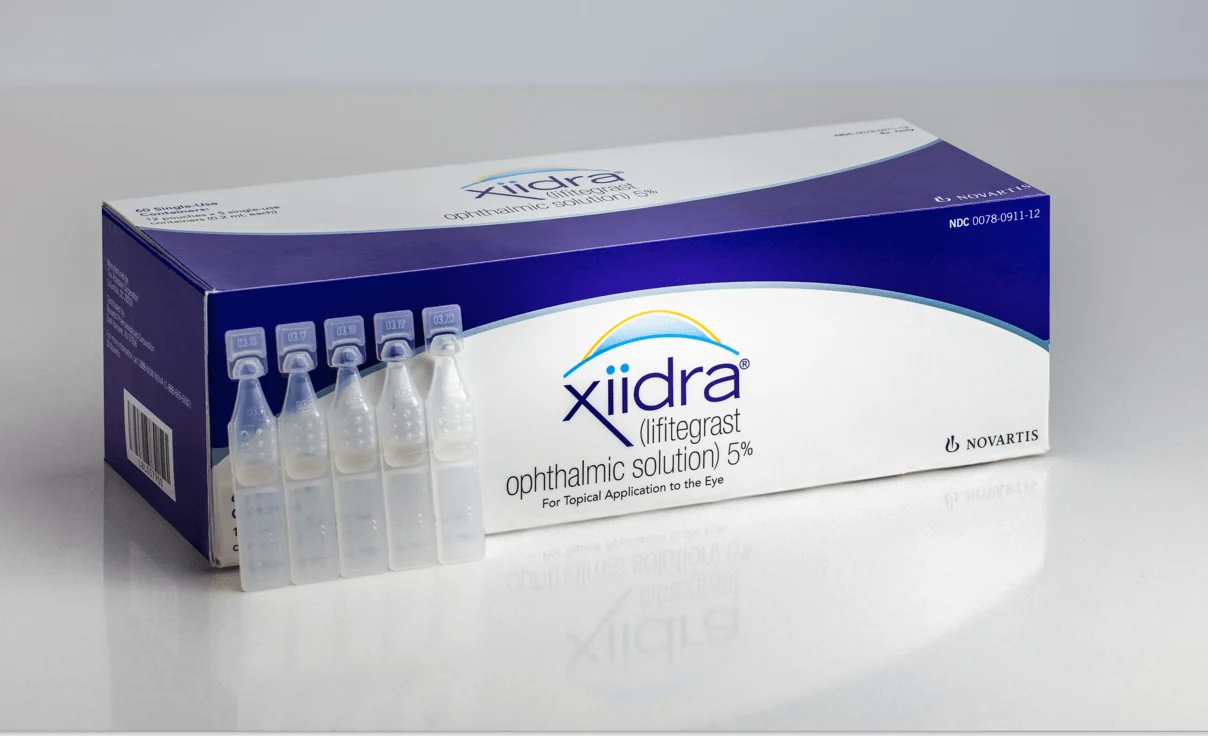
Xiidra (lifitegrast ophthalmic solution 5%) is a prescription eye drop for treating signs and symptoms of dry eye disease. It works differently from cyclosporine drops by blocking a specific inflammatory pathway involved in dry eye.
Official website: xiidra.com
Key takeaways
- Blocks inflammation through a different mechanism than cyclosporine
- Response varies; agree on when to review symptoms and eye-surface findings
- Twice daily dosing: one drop in each eye every 12 hours
- Common side effects include unusual taste and eye irritation
- Can be used alongside artificial tears
Questions about your diagnosis? Contact our office
How It Works
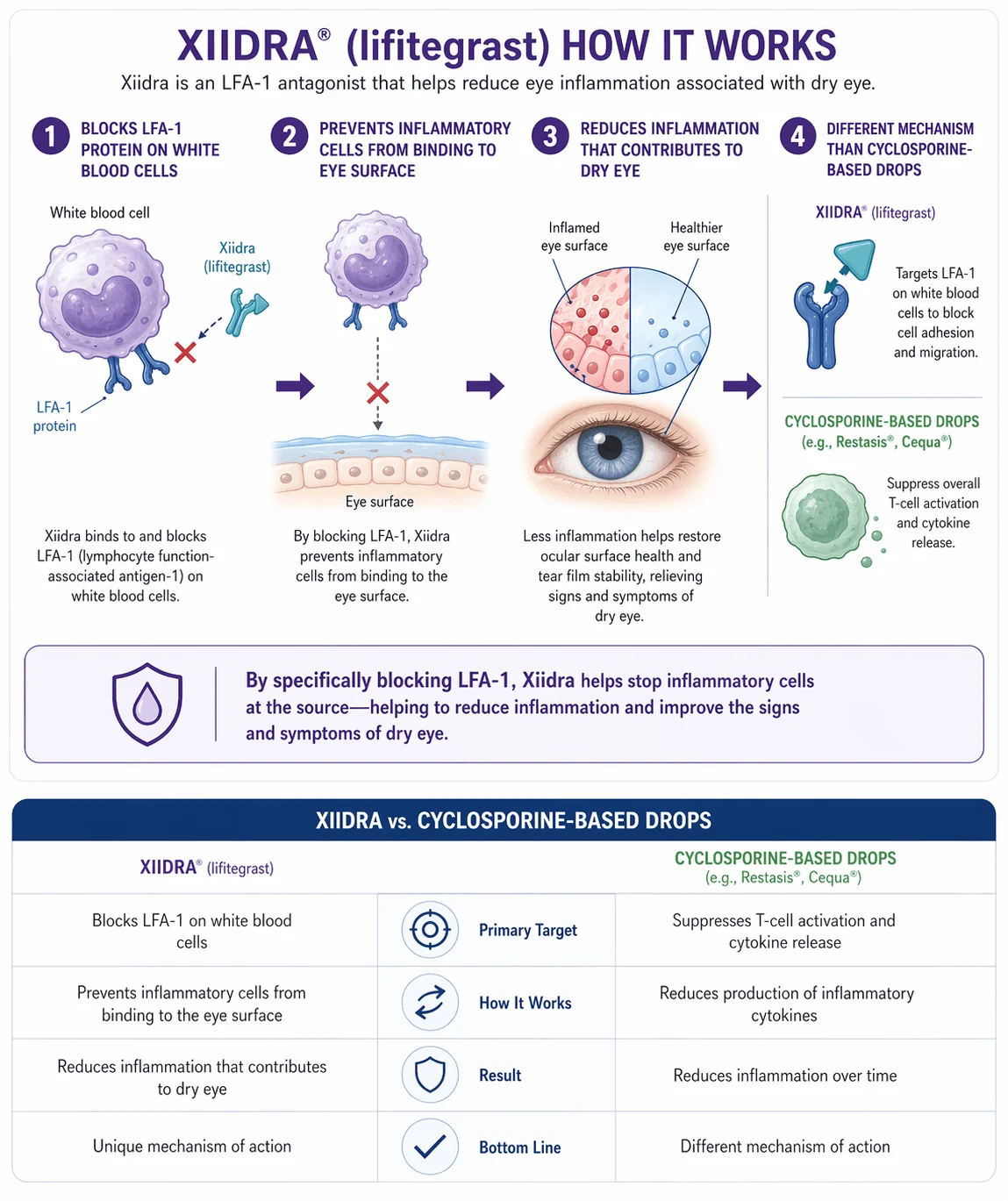
Xiidra is an LFA-1 antagonist that:
- Blocks LFA-1 protein on white blood cells
- Prevents inflammatory cells from binding to eye surface
- Reduces inflammation that contributes to dry eye
- Different mechanism than cyclosporine-based drops
Common Uses
- Dry eye syndrome: signs and symptoms
- When artificial tears alone aren't sufficient
- When cyclosporine drops aren't tolerated or effective
- Meibomian gland dysfunction with inflammatory component
- Can be combined with other dry eye treatments
How to Use
- Dosing: One drop in each eye twice daily, approximately 12 hours apart
- Single-use vials: Each vial is for one-time use (preservative-free)
- Instillation: Wash hands, tilt head back, pull down lower eyelid, apply drop
- After instillation: Close eyes gently; press on inner corner of eye for 1-2 minutes to reduce taste effect
- Contact lenses: Remove before use; wait 15 minutes before reinserting
- Other drops: Wait 5 minutes between different eye medications
What to Expect
Timeline
- First 2 weeks: Some patients notice improvement relatively quickly
- 6-12 weeks: Reassess response and tolerability
- Ongoing: Continue treatment for maintained benefit
Unique Feature
A different mechanism does not guarantee a better or faster individual response. Review the result with your clinician rather than changing drops on a fixed timetable.
Side Effects
Common
- Dysgeusia (altered taste): most distinctive side effect
- Unusual, often bitter or metallic taste
- Occurs when drop drains into throat
- Temporary after each dose
- Eye irritation
- Blurred vision
- Eye discomfort
Less Common
- Headache
- Sinusitis
- Eye redness
- Eye itching
Managing Taste Side Effect
- Press on the inner corner of your eye for 1-2 minutes after instillation
- This blocks the tear duct and reduces drainage into the throat
- The taste diminishes quickly after each dose
- Most patients adapt over time
Precautions
- Contact lenses: Remove before use; wait 15 minutes to reinsert
- Pregnancy/breastfeeding: Limited data; discuss with doctor
- Eye infections: Don't use during active eye infection
- Keep tip sterile: Don't touch dropper tip to eye or other surfaces
Cost and Insurance
- Brand-name medication
- Insurance coverage varies widely
- Check manufacturer savings programs
- May have prior authorization requirements
For a full side-by-side comparison of all prescription dry eye medications, see comparing dry eye prescription drops.
When to Seek Help
Rare serious hypersensitivity has been reported. Stop Xiidra and call 911 for breathing difficulty or throat/tongue swelling. Contact your eye clinician promptly for persistent pain, increasing redness, or reduced vision rather than assuming these are the usual taste or instillation effects.
Frequently Asked Questions
Why do I taste something weird after using Xiidra?
Eye drops can drain through the tear ducts into the nose and throat. Lifitegrast has a distinctive taste that many patients notice. Pressing the corner of your eye for a minute after instillation can reduce this.
Is Xiidra better than Restasis?
Xiidra and Restasis work through different inflammatory pathways, and individual responses vary. Some patients respond better to one medication, while others use both under an eye doctor's guidance.
How long does Xiidra take to work?
Some patients notice symptom improvement within 2 weeks, while others need more time. In clinical studies, dryness symptoms improved at 2 weeks in 2 of 4 studies and at 6 and 12 weeks in all 4 studies, so use Xiidra consistently and review your response with your eye doctor.
Is Xiidra preservative-free?
Yes. Xiidra is a sterile, preservative-free solution supplied in single-use containers. Use one container for both eyes immediately after opening, then discard the container and any remaining solution.
Can I use Xiidra with artificial tears?
Yes, artificial tears can be used alongside Xiidra for comfort. Wait at least 5 minutes between different eye drops.
Will the taste side effect go away?
The taste occurs with each dose but diminishes quickly after instillation. Most patients find it becomes less bothersome with continued use, though it doesn't completely disappear.
How long do I need to use Xiidra?
Dry eye is typically a chronic condition requiring ongoing treatment. If you stop Xiidra, symptoms usually return. Discuss your long-term treatment plan with your doctor.
References
- DailyMed. XIIDRA prescribing information.
Medical Disclaimer: This information is for educational purposes only and does not replace professional medical advice. Follow your doctor's instructions regarding this medication.