

Long-term steroid treatment can be necessary for inflammatory eye and neurologic conditions, but it needs active monitoring. The main risks to track are blood pressure, blood sugar, bone health, infection risk, adrenal suppression, cataract, and steroid-related eye pressure elevation.
Key takeaways
- Steroids are often essential for treating serious inflammatory eye conditions
- Side effects are manageable with proper monitoring and lifestyle adjustments
- Never stop steroids suddenly; this can cause serious complications
- Regular monitoring of blood pressure, blood sugar, and bone health is important
- Work closely with your doctors to taper to the lowest effective dose
Questions about your diagnosis? Contact our office
Visual guide: Long-term steroid safety
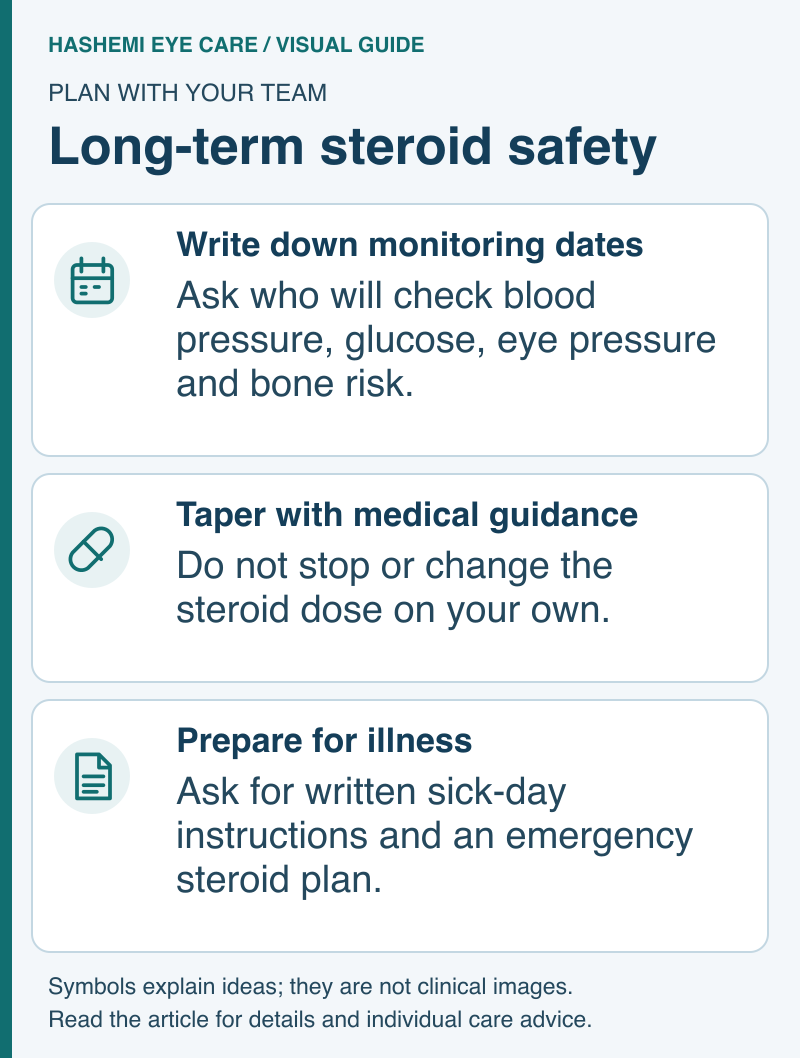
Read this visual as text
Why Steroids Are Prescribed
Corticosteroids are powerful anti-inflammatory medications used to treat conditions where the immune system attacks the body's own tissues. In neuro-ophthalmology, they're commonly prescribed for:
- High-dose steroids are lifesaving; they prevent blindness
- Treatment typically lasts 1-2 years or longer
- Prevents vision loss in the second eye
- May speed visual recovery
- High-dose IV steroids followed by oral taper
- Shorter treatment course than GCA
- Used during active inflammatory phase
- Helps reduce swelling and double vision
- May be needed for several months
Other conditions:
- Orbital inflammatory disease
- Myasthenia gravis (sometimes)
- Autoimmune optic neuropathies
Understanding Your Regimen
Types of Steroids You May Receive
IV Methylprednisolone (Solu-Medrol)
- Given through an IV, usually in hospital or infusion center
- High doses (500-1000 mg daily) for 3-5 days
- Used for acute, severe inflammation
- Part of IV steroid treatment
Prednisone (Oral)
- Taken by mouth, usually once daily in the morning
- Starting doses vary (20-80 mg or higher depending on condition)
- Gradually tapered over weeks to months
Other Corticosteroids
- Prednisolone-similar to prednisone
- Dexamethasone-longer acting, sometimes used
- Methylprednisolone tablets-alternative to prednisone
Understanding Your Dose
- Physiologic dose: About 5-7.5 mg prednisone daily (what your body naturally makes)
- Low dose: 7.5-10 mg daily
- Medium dose: 10-20 mg daily
- High dose: More than 20 mg daily
- Very high dose: 40 mg or more daily
The goal is to use the lowest dose that controls your condition while minimizing side effects.
Managing Side Effects
Long-term steroid use can cause side effects, but understanding and addressing them makes treatment more manageable.
Mood and Sleep Changes
What happens:
- Feeling "wired" or energetic
- Difficulty sleeping
- Mood swings, irritability
- Sometimes anxiety or depression
What helps:
- Take steroids in the morning (mimics natural cortisol rhythm)
- Practice good sleep hygiene
- Limit caffeine, especially after noon
- Talk to your doctor if mood changes are severe
- Exercise can help regulate mood
Increased Appetite and Weight Gain
What happens:
- Increased hunger, especially for carbohydrates
- Fluid retention
- Fat redistribution (face, abdomen, back of neck)
What helps:
- Plan healthy meals and snacks in advance
- Focus on protein and vegetables to feel full
- Limit salt to reduce fluid retention
- Regular exercise as tolerated
- Weight gain often improves as dose decreases
Blood Sugar Elevation
What happens:
- Steroids can raise blood sugar, even in non-diabetics
- May unmask or worsen diabetes
- Usually improves as dose decreases
What helps:
- Limit sugary foods and refined carbohydrates
- Monitor blood sugar if advised by your doctor
- May need diabetes medications temporarily
Blood Pressure Increase
What happens:
- Steroids cause fluid retention
- Can raise blood pressure
What helps:
- Limit sodium intake
- Monitor blood pressure at home
- Take blood pressure medications as prescribed
- Exercise regularly
Bone Loss (Osteoporosis)
What happens:
- Steroids interfere with bone formation
- Bone loss begins early in treatment
- Increases fracture risk
What helps:
- Discuss a calcium target from food plus supplements; do not add 1000–1200 mg of supplements on top of dietary calcium without checking the total
- Vitamin D (800-2000 IU daily)
- Weight-bearing exercise
- Bone density testing
- May need osteoporosis medications (bisphosphonates)
Stomach Irritation
What happens:
- Stomach upset, heartburn
- Increased ulcer risk, especially with NSAIDs
What helps:
- Take steroids with food
- Avoid NSAIDs (ibuprofen, naproxen) if possible
- Your doctor may prescribe stomach protection
Infection Risk
What happens:
- Steroids suppress the immune system
- Increased risk of infections
- Infections may be harder to detect (fever may be suppressed)
What helps:
- Practice good hand hygiene
- Avoid sick contacts when possible
- Stay up to date on vaccinations (discuss timing with your doctor)
- Report any signs of infection promptly
Other Effects
- Skin thinning and easy bruising: Handle skin gently
- Cataracts: Regular eye exams
- Glaucoma: Eye pressure monitoring
- Muscle weakness: Exercise helps maintain strength
Protecting Your Long-Term Health
Bone Health Protocol
- Get a bone density (DEXA) scan at baseline
- Take calcium (1000-1200 mg daily, ideally from food + supplements)
- Take vitamin D (800-2000 IU daily)
- Weight-bearing exercise (walking, stairs, light weights)
- Repeat DEXA typically after 1-2 years
- Bisphosphonate therapy if significant bone loss
Heart Health
- Monitor blood pressure regularly
- Cholesterol may increase-testing recommended
- Heart-healthy diet with limited salt and saturated fat
- Regular exercise as tolerated
- Control blood sugar
Eye Health
- Regular eye exams to monitor for cataracts and glaucoma
- Report any vision changes promptly
Lifestyle Adjustments
Diet Recommendations
Focus on:
- Lean proteins (chicken, fish, beans, legumes)
- Vegetables and fruits
- Whole grains
- Low-fat dairy for calcium
- Adequate water intake
Limit:
- Salt and salty foods (reduces fluid retention)
- Sugar and refined carbohydrates
- Alcohol
- Processed foods
Exercise
Even moderate exercise helps:
- Maintain bone density
- Control weight
- Improve mood and sleep
- Build muscle strength
- Manage blood sugar
Start with walking and gradually increase as tolerated. Discuss with your doctor before starting new exercise programs.
Stress Management
Long-term illness and medication side effects can be stressful. Consider:
- Support groups for your condition
- Counseling or therapy
- Mindfulness and relaxation techniques
- Connecting with friends and family
- Engaging in enjoyable activities
Monitoring Schedule
Your doctors will recommend regular blood tests and check-ups:
Agree on Your Monitoring Plan
Before leaving the prescribing visit, write down who will check blood pressure, weight, glucose, eye pressure, and bone/fracture risk, and when each is due. Timing depends on dose, duration, existing diabetes or glaucoma, and previous results; some checks may be needed soon after starting or increasing treatment.
Ask whether you need bone-protective medicine before measurable bone loss occurs, based on fracture risk. Bring a complete medicine list to avoid duplicate calcium or vitaminD supplements.
For Giant Cell Arteritis
- ESR and CRP (inflammation markers) regularly
- Watching for relapse symptoms
Never Stop Suddenly
Warning: Never stop steroids abruptly without medical guidance.
After taking steroids for more than a few weeks, your body's natural cortisol production is suppressed. Stopping suddenly can cause:
- Adrenal crisis (life-threatening)
- Severe fatigue, weakness
- Nausea, vomiting
- Low blood pressure
- Flare of your underlying condition
Always taper steroids slowly under your doctor's supervision.
How Tapering Works
- Dose is reduced gradually over weeks to months
- Slower tapers for longer treatment durations
- Your doctor monitors for disease flare during taper
- Final steps (below physiologic dose) are often slowest
- Your adrenal glands need time to "wake up"
During Illness or Surgery
While on steroids or recently tapered, your body may need extra steroids during:
- Significant illness with fever
- Major surgery
- Severe injury or trauma
Tell all your healthcare providers that you take (or recently took) steroids. Ask for written sick-day instructions, what to do if vomiting prevents tablets staying down, and whether you need medical-alert identification or an emergency steroid plan.
When to Call Your Doctor
Contact your doctor if you experience:
- Return of original symptoms (possible relapse)
- Signs of infection: fever, chills, cough, painful urination
- Severe stomach pain
- Unusual weakness or fatigue
- New vision changes
- Severe mood changes
- Significant swelling
Emergency Situations
Call 911 now for suspected adrenal crisis, stroke symptoms, severe allergic reaction, chest pain, or severe shortness of breath. Do not wait for an office callback. Follow any prescribed emergency steroid plan while help is coming.
- Signs of adrenal crisis: severe weakness, vomiting, confusion
- Stroke symptoms
- Severe allergic reaction
- Chest pain
Steroid-Sparing Medications
For conditions requiring long-term immunosuppression, your doctor may add other medications to allow a lower steroid dose:
- Methotrexate: Often used with GCA
- Tocilizumab (Actemra): Approved for GCA, can allow faster steroid taper
- Mycophenolate: Used for various inflammatory conditions
- Azathioprine: Another steroid-sparing option
These medications have their own monitoring requirements but can significantly reduce steroid exposure.
Frequently Asked Questions
Why do I have to take steroids for so long?
Some conditions require prolonged treatment to prevent relapse. With GCA, for example, stopping steroids too early can lead to blindness. Your doctor balances the risks of treatment against the risks of your underlying condition.
Can I take just a little less if I feel fine?
Never adjust your steroid dose without consulting your doctor. Feeling well might mean the steroids are working-reducing the dose could trigger a relapse. Changes must be made carefully and monitored.
Will the weight gain go away?
Most weight gain improves as the steroid dose decreases. Healthy eating and exercise during treatment can minimize weight gain and make recovery easier.
Is it safe to get vaccinated while on steroids?
Live vaccines (like MMR, live-attenuated influenza) should generally be avoided on higher steroid doses. Inactivated vaccines (like flu shot, COVID-19) are typically safe and recommended. Note: the current shingles vaccine (Shingrix) is not a live vaccine and is recommended for many immunosuppressed adults, but timing should be individualized with your clinician.
Will my bones definitely get weak?
Bone loss is common but not inevitable. Taking calcium, vitamin D, exercising, and sometimes bone-protecting medications can maintain bone health. The lower your steroid dose and the shorter the duration, the less bone loss occurs.
Can I drink alcohol?
Moderate alcohol consumption is usually acceptable, but alcohol can worsen stomach irritation, sleep problems, and blood sugar control. Discuss your specific situation with your doctor.
References
-
European Society of Endocrinology and Endocrine Society. Glucocorticoid-induced adrenal insufficiency guideline.2024.
-
Grossman JM, et al. American College of Rheumatology 2017 guideline for the prevention and treatment of glucocorticoid-induced osteoporosis. Arthritis & Rheumatology. 2017.
-
Buttgereit F, et al. Glucocorticoids: current and future directions. British Journal of Clinical Pharmacology. 2021.
-
American College of Rheumatology. Glucocorticoid-Induced Osteoporosis.
Medical Disclaimer: This information is for educational purposes only and does not replace professional medical advice, diagnosis, or treatment. Never adjust your steroid dose without consulting your healthcare provider.