

Tocilizumab (brand name Actemra) is a monoclonal antibody that blocks interleukin-6 (IL-6), an inflammatory signaling molecule. It's approved for giant cell arteritis (GCA) and is used off-label for some patients with NMO.
Official website: actemra.com
Key takeaways
- IL-6 inhibitor: blocks inflammatory signaling
- Approved for GCA
- Allows faster steroid tapering in GCA
- Given as injection or IV infusion
- Masks signs of infection: requires vigilance
Questions about your diagnosis? Contact our office
Visual guide: Tocilizumab: symptoms still matter
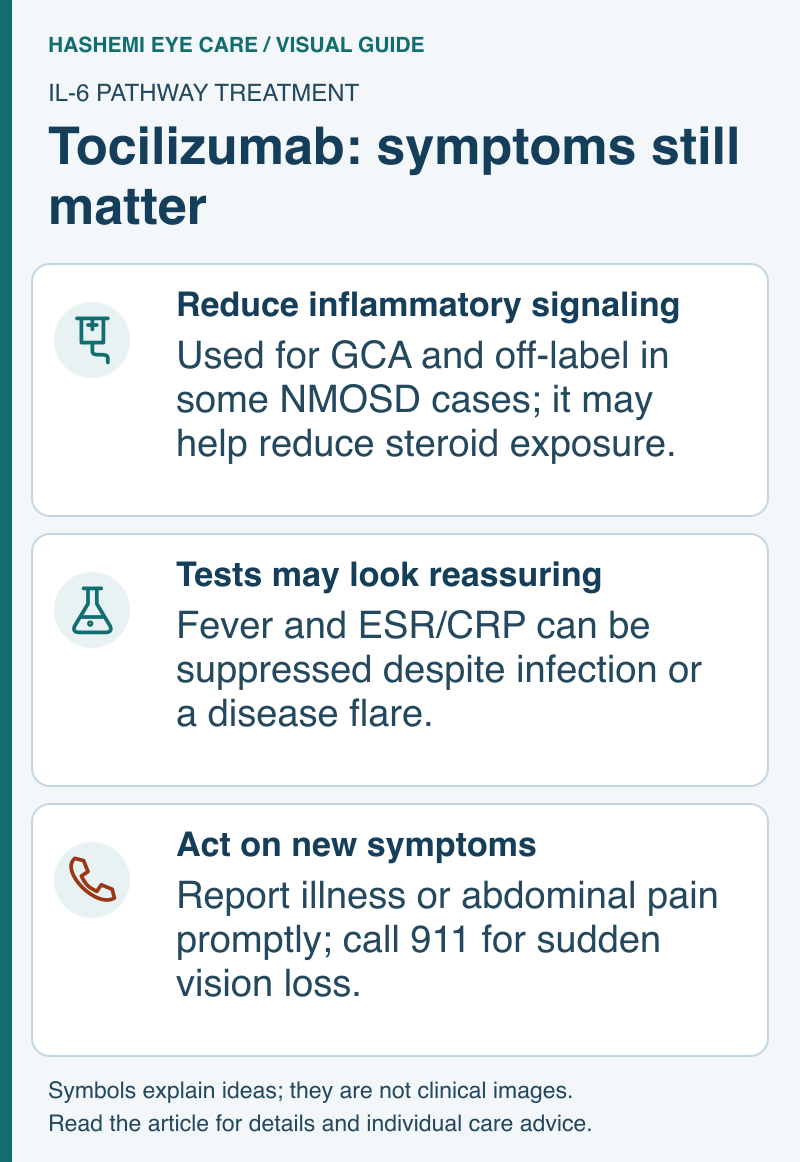
Read this visual as text
How It Works
IL-6 is a key driver of inflammation in conditions like GCA. By blocking IL-6, tocilizumab reduces the inflammatory process. It also allows faster tapering of steroids.
Common Uses
- Giant cell arteritis-FDA approved
- NMO-off-label
- Rheumatoid arthritis
Administration
For adults with GCA, the U.S. label gives these options:
- Under the skin: 162 mg once weekly; every-other-week dosing may be prescribed for selected patients
- IV infusion: 6 mg/kg every four weeks, with a maximum of 600 mg per infusion
- Treatment begins with a prescribed steroid taper; tocilizumab may continue alone after steroids are discontinued
Self-injection is possible after training. Follow your own prescription and ask the treating team about any missed dose or new infection.
Side Effects
Common
- Injection site reactions
- Upper respiratory infections
- Headache
- Elevated liver enzymes
- Elevated cholesterol
Serious
- Serious infections
- Opportunistic infections, tuberculosis, invasive fungal infections, and sepsis
- GI perforation (rare)
- Liver damage
- Allergic reactions
Important Warning
FDA boxed warning - serious infections: Tocilizumab can increase the risk of serious infections that may require hospitalization or can be fatal. It should not be given during an active infection, including a localized infection. Patients should be screened for tuberculosis before starting, monitored closely during treatment, and the medication is held if a serious infection, opportunistic infection, or sepsis develops.
Masks infection and GCA activity signs: Tocilizumab can suppress fever and inflammatory markers (CRP, ESR), which normally alert clinicians to infection or active inflammation. Report new cough, burning with urination, skin infection, abdominal pain, shingles-like rash, or feeling unusually ill even if you do not have a fever.
Monitoring
- Liver function tests
- Lipid panel
- Complete blood count
- TB screening before starting and monitoring for TB symptoms during therapy
- Careful infection monitoring; hold treatment if a serious infection develops
Benefits in GCA
- Can taper steroids faster (reducing steroid side effects)
- Reduces risk of GCA flares
- Long-term steroid-sparing
Pregnancy, Breastfeeding, and Vaccines
Tell your prescribing team about pregnancy plans or breastfeeding; human data are limited and treatment needs an individual benefit-risk discussion. Review vaccines before starting. Live vaccines should be avoided during treatment; ask the team about the timing of non-live vaccines.
Which Symptoms Need Action?
- New dimming, a missing area of vision, or double vision with GCA: seek same-day emergency eye assessment, even if ESR/CRP are normal. Call 911 for sudden vision loss or associated stroke symptoms.
- New infection symptoms or feeling unusually ill: contact the prescribing team promptly, even without fever, and ask about the next dose.
- Severe or persistent new abdominal pain, or a marked change in bowel habits, with or without fever: seek urgent medical care because bowel perforation is a rare serious risk.
Frequently Asked Questions
Can I stop steroids?
Tocilizumab allows faster steroid tapering but usually doesn't replace steroids entirely, at least initially. Many patients can eventually stop steroids or use very low doses.
Will I still need ESR/CRP monitoring?
Tocilizumab often lowers ESR and CRP, so normal results cannot reliably rule out a flare or infection. Keep follow-up appointments and report symptoms even when your recent blood tests looked reassuring.
How long will I need this?
Duration varies. Some patients can stop after 1-2 years if GCA is in remission; others need longer treatment.
References
- U.S. Food and Drug Administration. ACTEMRA (tocilizumab) prescribing information.
- DailyMed. ACTEMRA (tocilizumab) prescribing information.
Medical Disclaimer: This information is for educational purposes only and does not replace professional medical advice.