IV steroid treatment delivers high-dose corticosteroids directly into the bloodstream, usually over several consecutive days, to reduce acute inflammation affecting the optic nerve, orbit, or visual system. It is used when rapid anti-inflammatory treatment is needed, including situations where vision is at immediate risk.
Key takeaways
- High-dose steroids are given through an IV line, usually in an infusion center or hospital
- Can speed recovery in optic neuritis, even when final vision may not change
- Urgent and often vision-saving when giant cell arteritis is suspected
- Most courses run 3-5 days
- Often followed by oral steroids or another longer-term plan
Questions about your diagnosis? Contact our office
Visual guide: IV steroid treatment
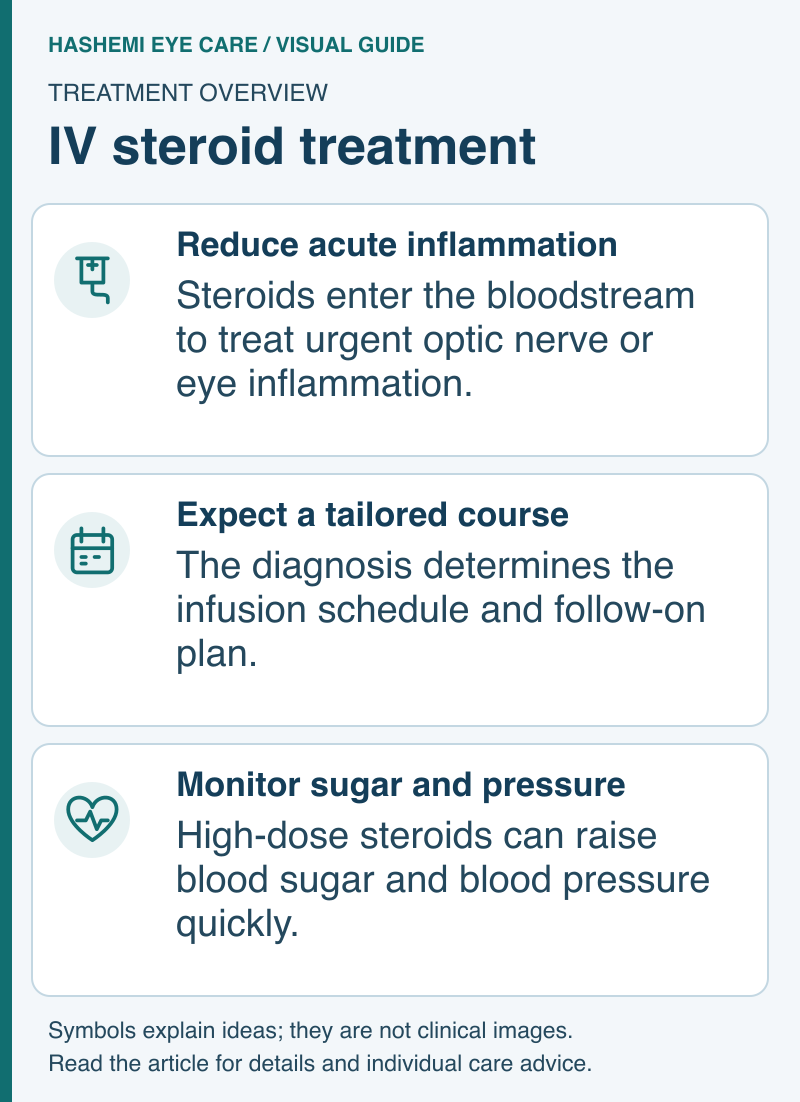
Read this visual as text
Common Uses
- Acute optic neuritis, especially when vision loss is moderate to severe
- Giant cell arteritis with threatened vision or other selected ischemic features; glucocorticoid treatment should not wait for biopsy
- NMO attacks
- MOGAD attacks
- Severe active thyroid eye disease
- Other inflammatory optic neuropathies, depending on the cause
What to Expect
Before Treatment
- Blood tests, often including glucose and electrolytes
- Blood pressure check
- Review of current medications, diabetes history, infection risk, and stomach-protection needs
- IV line placement; sometimes a new one each day, sometimes left in for the course
During Treatment
- Infusion over 1-2 hours
- For acute optic neuritis, a common adult regimen is methylprednisolone 1 gram daily for 3-5 days, selected by the treating specialist
- Other diagnoses use different schedules. Thyroid eye disease often uses weekly pulses; a daily optic-neuritis regimen should not be assumed to apply
- Often outpatient, though hospital treatment is used when the situation is unstable or the diagnosis is urgent
Side Effects During Infusion
- Temporary metallic taste
- Flushing or warmth
- Restlessness, insomnia, or feeling "wired"
- Temporary blood sugar and blood pressure elevation
- Stomach upset, mood swings, increased appetite
After Treatment
For practical guidance on managing these effects, see living with steroid treatment.
Short-Term Effects
- Mood changes, up or down
- Insomnia
- Increased appetite
- Elevated blood pressure
- High blood sugar, especially in people with diabetes or prediabetes
- Fluid retention or facial puffiness after a few days
Oral Steroid Taper
An oral steroid taper is sometimes prescribed after the IV course. The taper depends on the diagnosis: optic neuritis may not need the same plan as giant cell arteritis, and giant cell arteritis usually requires a much longer treatment strategy.
For Optic Neuritis
In typical demyelinating optic neuritis studied in the Optic Neuritis Treatment Trial, high-dose steroids accelerated recovery without a clear long-term visual advantage. That result should not be generalized to NMO or MOGAD, which need prompt disease-specific treatment and sometimes early plasma exchange. Steroids are not a substitute for long-term MS treatment when that is indicated.
For Giant Cell Arteritis
When giant cell arteritis is strongly suspected, clinicians start glucocorticoids immediately without waiting for biopsy. IV pulses are generally favored when vision is threatened; high-dose oral treatment is generally used without cranial ischemia. The treating team selects the route, and arranging an infusion must not delay treatment.
Frequently Asked Questions
Do IV steroids restore vision that is already lost?
Sometimes vision improves, especially when inflammation is reversible, but IV steroids are often used to stop worsening and speed recovery rather than guarantee full reversal. The expected benefit depends on the diagnosis.
Can I drive myself home after an infusion?
Many patients can, but arrange a ride if you feel wired, lightheaded, sleep-deprived, or your vision is still impaired. If treatment is for an urgent neurologic or vascular problem, your care team may restrict driving.
Why are blood sugar and blood pressure checked?
High-dose steroids can raise both quickly, even during short courses. This matters most for people with diabetes, prediabetes, hypertension, infection risk, or heart disease.
References
-
European Group on Graves' Orbitopathy. 2021 EUGOGO Clinical Practice Guidelines.
-
National Eye Institute. Oral corticosteroids alone found ineffective for optic neuritis.
-
Beck RW, Gal RL. Treatment of acute optic neuritis: a summary of findings from the Optic Neuritis Treatment Trial. Arch Ophthalmol. 2008;126(7):994-995.
-
Maz M, et al. 2021 American College of Rheumatology/Vasculitis Foundation guideline for the management of giant cell arteritis and Takayasu arteritis. Arthritis Rheumatol. 2021;73(8):1349-1365.
Medical Disclaimer: This information is for educational purposes only and does not replace professional medical advice.