

Restasis (cyclosporine ophthalmic emulsion 0.05%) is a prescription eye drop that helps increase your eyes' natural ability to produce tears. It's one of the most widely prescribed treatments for dry eye disease.
Official website: restasis.com
Key takeaways
- Increases natural tear production by reducing inflammation
- Twice daily dosing: one drop in each eye every 12 hours
- Takes weeks to months to see full effect; patience is important
- Common side effect: temporary burning upon instillation
- Available as brand or generic (cyclosporine 0.05%)
Prescription drops are one part of dry-eye care; a broader dry-eye evaluation can look for tear-film, surface, and eyelid-gland contributors.
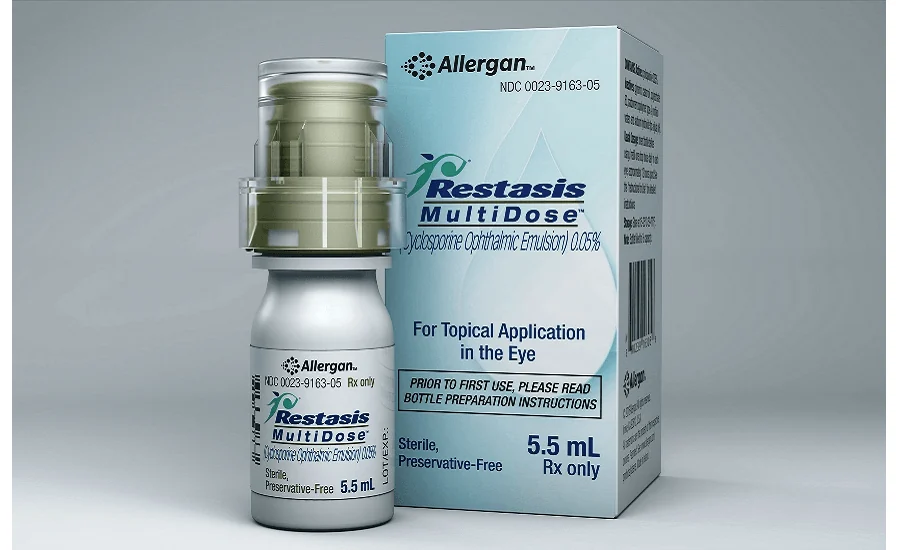
Restasis Generic Name and Generic Cyclosporine 0.05%
The generic name for Restasis is cyclosporine ophthalmic emulsion 0.05%. FDA-approved generic cyclosporine 0.05% is considered bioequivalent and therapeutically equivalent to Restasis; see cyclosporine eye drops for a focused comparison of Restasis, generic cyclosporine, and Cequa.
Is Restasis Available Over the Counter?
Restasis and generic cyclosporine 0.05% are prescription-only eye drops in the United States. Over-the-counter artificial tears provide immediate lubrication, while Restasis treats ocular-surface inflammation over time and requires a prescription.
How It Works
Restasis contains cyclosporine, an immunomodulator that:
- Reduces inflammation on the eye surface
- Allows your tear glands to function better
- Helps restore natural tear production
- Targets the underlying inflammation that drives dry-eye symptoms
Common Uses
- Dry eye disease with reduced tear production
- When over-the-counter artificial tears aren't enough
- May be used with other dry eye treatments
- Not for immediate symptom relief
Restasis Dosage and How to Use
- Dosing: One drop in each eye twice daily, approximately 12 hours apart
- Instillation: Wash hands, tilt head back, gently pull down the lower eyelid, and apply the drop without touching the tip to your eye or another surface
- After instillation: Close eyes gently for 1-2 minutes
- Contact lenses: Remove before use; wait 15 minutes before reinserting
- Artificial tears: Leave 15 minutes between Restasis and lubricant eye drops; ask your clinician about spacing other prescribed eye medicines
Single-Use Vials
Before opening, invert the vial a few times until the emulsion is uniformly white and opaque. Use it for the prescribed dose, then discard the vial immediately, including any remaining medicine. Do not save an opened single-use vial for the next dose.
Restasis MultiDose Bottle
Follow the bottle's instructions for removing the shipping cover, pull tab, and protective cap. Before the first use only, prime the bottle by squeezing two drops onto a tissue without touching the tissue with the tip. Before each dose, turn the bottle upside down a few times to mix the medicine. Replace the protective cap after use. The MultiDose bottle is reused as directed on its label; the single-use-vial disposal instruction does not apply to it.
What to Expect
Timeline
- Week 1-4: May not notice much difference; some patients experience more discomfort initially
- Month 1-3: Gradual improvement may begin
- Month 3-6: Your clinician can assess whether tear production, symptoms, and the eye surface are improving; response varies
- Ongoing: Continue use to maintain benefits
Important Points
- Keep using artificial tears as needed for comfort
- Don't give up too soon; it takes time
- Consistent use is key to success
Restasis Side Effects
Common
- Burning or stinging upon instillation (occurs in about 15-20% of patients)
- Eye redness
- Discharge
- Watery eyes
- Blurred vision (temporary)
Less Common
- Eye pain
- Foreign body sensation
- Itching
- Visual disturbance
Managing Burning
- Often improves with continued use
- Store at the labeled room temperature; ask your pharmacist before changing storage conditions
- Use preservative-free artificial tears before Restasis
- Some patients find improvement after a few weeks
Precautions
- Eye infections: Don't use during active eye infection
- Contact lenses: Remove before use; wait 15 minutes to reinsert
- Herpes keratitis history: Use with caution
- Pregnancy/breastfeeding: Discuss with doctor
Cost and Insurance
- Generic available: Cyclosporine 0.05% emulsion
- Insurance coverage varies
- Generic may be more affordable
- Manufacturer savings programs may be available
For a full side-by-side comparison of all prescription dry eye medications, see comparing dry eye prescription drops.
Restasis vs. Other Options
| Medication | Mechanism | Onset | Notes |
|---|---|---|---|
| Restasis | Immunomodulator | Weeks-months | Original cyclosporine for dry eye |
| Cequa | Immunomodulator | Weeks-months | Higher concentration (0.09%) |
| Xiidra | LFA-1 antagonist | May be faster | Different mechanism |
| Artificial tears | Lubrication | Immediate | Symptom relief only |
Frequently Asked Questions
How long do I need to use Restasis?
Dry eye is usually a chronic condition. Most patients use Restasis indefinitely to maintain improvement. Stopping treatment often allows ocular-surface inflammation and symptoms to become active again.
Why does Restasis burn?
Temporary burning is common. Artificial tears may help when separated from Restasis by 15 minutes. Contact your prescriber for severe, persistent, or worsening burning, pain, redness, or blur; an examination can check whether the medication or another eye problem is responsible.
Can I use Restasis with artificial tears?
Yes. Artificial tears can provide comfort while Restasis takes effect. Leave a 15-minute interval between Restasis and lubricant drops.
What if Restasis isn't working for me?
Arrange a follow-up after consistent use to compare symptoms and eye-surface findings. Benefits can take several months, but severe discomfort or worsening vision needs earlier assessment. Bring the bottle, your dosing schedule, other drops, and cost concerns so your clinician can check technique and adjust the plan.
Can Restasis cure my dry eye?
Restasis controls dry eye but doesn't cure it. Like many chronic conditions, ongoing treatment is usually needed to maintain benefits.
References
- DailyMed. RESTASIS single-use cyclosporine ophthalmic emulsion 0.05%: prescribing information.
- U.S. Food and Drug Administration. RESTASIS MULTIDOSE prescribing information and instructions for use. Revised August 2025.
Medical Disclaimer: This information is for educational purposes only and does not replace professional medical advice. Follow your doctor's instructions regarding this medication.