


Comprehensive Eye Exams
Eye exams in Encino: what to expect at your visit
A comprehensive eye exam at our Encino office uses advanced imaging and testing to detect eye conditions early, so treatment can start when it helps most.
Why It Matters
Why comprehensive eye exams are important
Many eye conditions, such as glaucoma, diabetic retinopathy, and macular degeneration, develop slowly and without noticeable symptoms. Regular eye exams allow for early detection and intervention, which can prevent vision loss and other serious complications.
To learn how a full eye exam fits into our services, see comprehensive eye care. For exam timing by age and risk, read our guide on how often you should get an eye exam.
Physician-Led Care
An exam connected to specialty eye care
Your visit takes place in the same Encino practice that provides comprehensive ophthalmology, neuro-ophthalmology, and surgical planning. If an examination identifies a more complex concern, the next step stays connected to the appropriate service.
What to Expect
Your exam, step by step
A comprehensive exam gives a complete view of your eye health across multiple measurements.
- Step 1
History and symptoms
We review your medical history, medications, family eye history, and anything you have noticed about your vision.
- Step 2
Vision and eye movement
Visual acuity, pupil responses, and how your eyes move and align - the basics that reveal more than most people expect.
- Step 3
Eye pressure
Tonometry measures the pressure inside the eye, a key screening step for glaucoma.
- Step 4
Slit-lamp examination
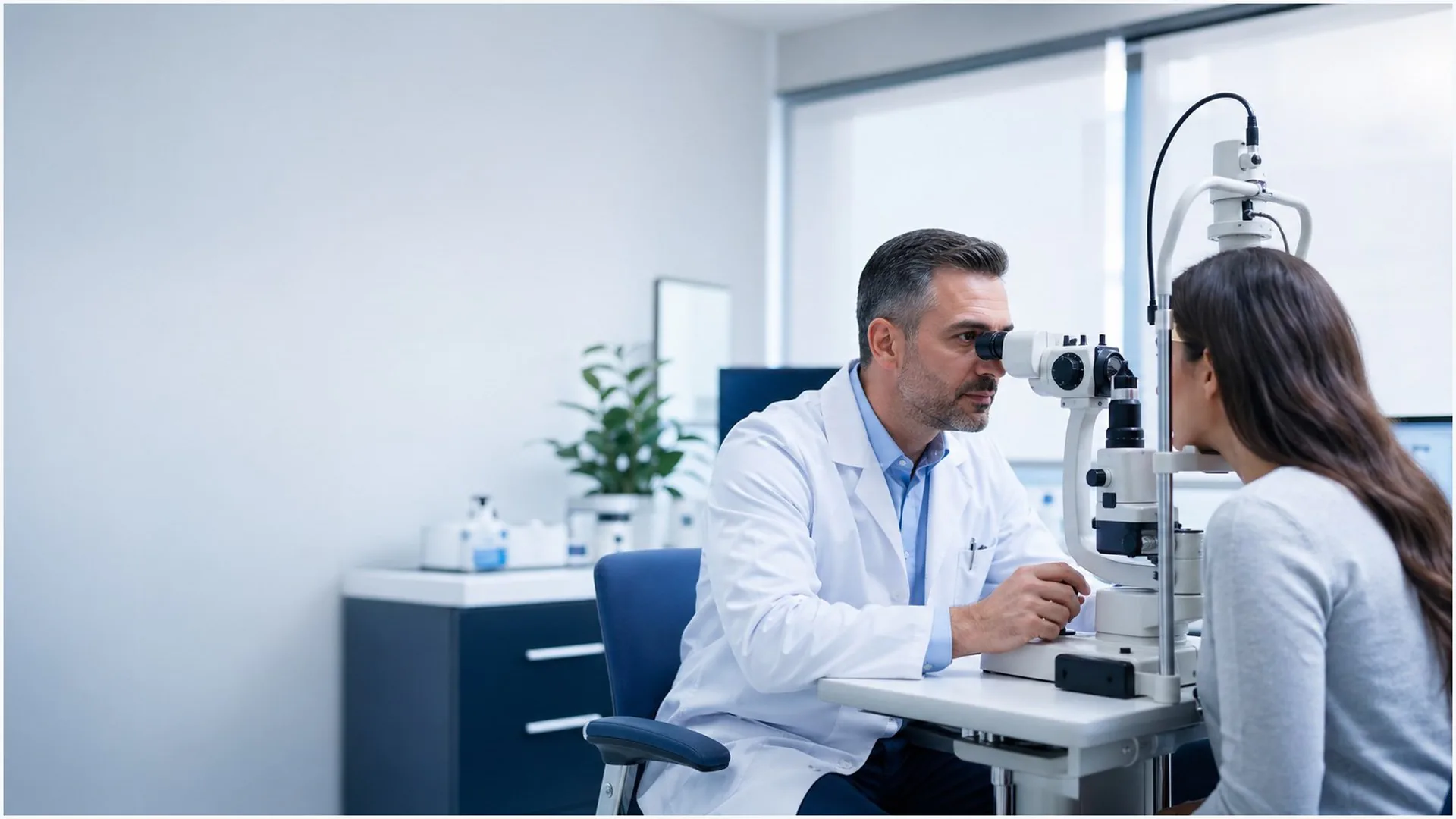
A microscope view of the front of the eye: lids, lashes, cornea, iris, and lens.
- Step 5
Dilated retinal exam
Drops widen the pupils so the retina and optic nerve can be examined directly.
- Step 6
Targeted testing when indicated
Depending on findings, we may add retinal imaging such as OCT or automated visual field testing the same day.
Neuro-ophthalmologic evaluations are more in-depth: they involve a complete medical history review, a neurological exam, and further specialized testing, and may take 60 to 90 minutes. If you’ve been referred for unexplained visual loss, double vision, or other complex issues, see our neuro-ophthalmology care page.
Preparing
Preparing for your eye exam
To ensure you get the most from your visit, bring:
- Medical and vision insurance cards, if applicable
- A current medication list with dosages
- Prior records, imaging, visual field tests, and OCT reports if you have them
- Current glasses, contact lenses, and any eye drops you use
- Sunglasses for the ride home - your pupils may be dilated
- A driver, if you prefer not to drive while dilated
New to the practice? The new patient page covers parking, insurance, and what your first visit looks like.
Insurance & Cost
Confirm coverage before your visit
Most services are billed through medical insurance; coverage varies by plan.
Coverage depends on your plan and the medical reason for the exam. Call the office before scheduling so the team can help you verify benefits and any referral paperwork.
Your Encino Visit
Directions, parking, and office details
We are located at 16542 Ventura Blvd #515, Encino, CA 91436. Office hours are Monday-Friday, 8am-5pm.
- The parking entrance is behind the building on Rubio St.
- Parking is $10 per hour; ask the front desk to stamp your ticket for 50% off.
- Bring sunglasses because your pupils may be dilated.
- Serving patients in Encino, Los Angeles, Sherman Oaks, Tarzana, Calabasas, Woodland Hills, Studio City, Burbank, Glendale, Pasadena, and the greater San Fernando Valley.
Open directions (opens in new tab) or review the full new-patient guide.
Between Exams
Maintaining eye health between exams
Your daily habits play a significant role in maintaining eye health between exams: wear UV-blocking sunglasses outdoors, keep systemic conditions like diabetes and blood pressure well controlled, and give your eyes regular breaks during screen work.
New flashes, many new floaters, or a shadow or curtain over your vision need urgent eye evaluation. Contact an eye doctor or go to an emergency department right away; do not wait for your next routine exam.
Related Education
Prepare with physician-reviewed guides
Common Questions
Comprehensive eye exam FAQs
How do I schedule an eye exam in Encino?
Call (818) 387-6565 during office hours (Monday-Friday, 8am-5pm), or request an appointment online at any time and the office will call you back to schedule.
Where is Hashemi Eye Care located?
Our office is at 16542 Ventura Blvd #515, Encino, CA 91436, on Ventura Boulevard. The parking entrance is behind the building on Rubio St.
Will my eyes be dilated during a comprehensive eye exam?
A comprehensive examination includes a dilated retinal examination so the retina and optic nerve can be examined directly. Bring sunglasses, and consider arranging a driver if you prefer not to drive while your pupils are dilated.
What should I bring to my eye exam?
Bring your medical and vision insurance cards, current medications, prior eye records or imaging, current glasses or contact lenses, and any eye drops you use.
Does Hashemi Eye Care prescribe glasses?
Hashemi Eye Care focuses on medical and specialized eye care and does not prescribe glasses. The examination evaluates eye health and identifies conditions that may need monitoring, testing, or treatment.
Do I need a referral for an eye exam?
A physician referral is not always required, but some insurance plans require referral paperwork.
Next Step
Schedule your eye exam today
Protect your vision by scheduling a comprehensive eye exam. Early detection is key to effective treatment.