


Cataract Surgery
Cataract Surgery in Encino
Small-incision cataract surgery planned and performed by Dr. Nafiseh Hashemi, with the diagnostic depth of a fellowship-trained neuro-ophthalmologist behind every evaluation.
Is It Time?
Signs it may be time for cataract surgery
Cataracts develop slowly, and there is no single number that says “now.” The right time for surgery is the point where clouded vision starts limiting your life.
- Night driving has become stressful, with glare and halos around headlights
- Reading or watching TV is harder even with new glasses
- Colors look faded, dull, or yellowed
- Your glasses prescription keeps changing without really helping
- Bright sunlight is increasingly uncomfortable
- Vision is interfering with work, hobbies, or independence
If another eye condition is also present, such as glaucoma, macular degeneration, or optic nerve disease, surgical timing matters more, not less. That is exactly where this practice is strongest: every cataract evaluation here is performed with neuro-ophthalmic training behind it.
Our Approach
A cataract evaluation that looks beyond the lens
Not all blurred vision is cataract. Retinal disease, glaucoma, and optic nerve conditions can hide behind a clouding lens, and removing the cataract will not fix them. As a fellowship-trained neuro-ophthalmologist, Dr. Hashemi evaluates the whole visual system before recommending surgery, so you know your expected outcome honestly before anything is scheduled.
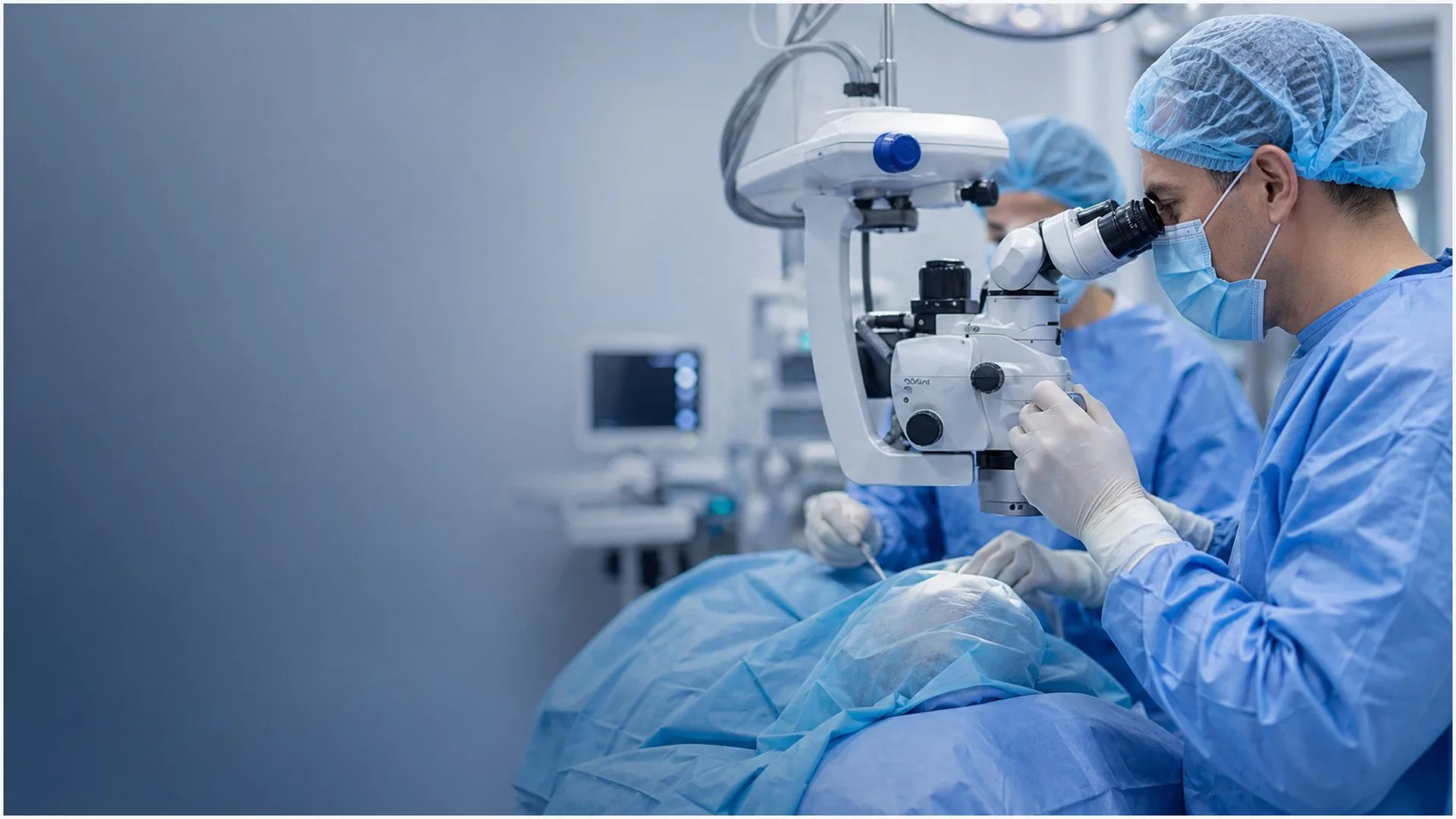
The procedure itself is modern small-incision phacoemulsification: the clouded lens is removed through a 2–3 mm self-sealing incision and replaced with a clear artificial lens (IOL). You are awake but comfortable, with numbing drops and light sedation, and you go home the same day.
Lens choice is a conversation, not an upsell. A standard monofocal implant set for distance serves most patients well with reading glasses; toric and extended-range lenses can reduce dependence on glasses in the right candidates. We explain what each option realistically delivers, and what it costs, before you decide.
What to Expect
Your cataract surgery, step by step
- Consultation
Full evaluation and measurements
A dilated examination of the whole eye, precise biometry measurements for lens selection, and an honest conversation about timing, options, and expected outcome.
- Before surgery
Simple preparation
Prescription eye drops start 2 days before surgery, you fast after midnight, and you arrange a ride home. Our full checklist is on the cataract surgery preparation page.
- Day of surgery
15–30 minutes, outpatient
Numbing drops and light sedation keep you awake but comfortable. The surgery itself typically takes 15–30 minutes, and you go home the same day with a protective shield.
- First week
Drops, rest, and quick gains
Most patients notice clearer vision within days. You use healing drops, wear the shield at night, and avoid rubbing, heavy lifting, and swimming.
- Weeks 2–6
Vision settles
Normal activities return quickly while vision continues to sharpen. We see you the day after surgery, at one week, and at one month.
- Long term
Final prescription and beyond
Glasses, if needed, are updated at 4–6 weeks. If the lens capsule later turns hazy, which happens in 10–30% of eyes over the years, a quick office laser (YAG) clears it.
Outcomes
What patients can realistically expect
Outcome figures come from published surgical series and our physician-reviewed patient education library. Individual results depend on overall eye health; no outcome is guaranteed.
Insurance & Cost
Insurance and costs, before surgery day
Cataract surgery is generally a medical service rather than a vision-plan benefit, and coverage details differ from plan to plan. Contact our office before scheduling and our staff will help you verify your benefits and understand any costs in advance, so there are no surprises on the day of surgery.
If you choose a premium lens implant, for astigmatism correction or an extended range of focus, the upgrade portion is typically an out-of-pocket cost, while standard monofocal implants fall under conventional cataract coverage. We put every option and its cost on the table at your consultation.
Patient Experiences
From our cataract surgery patients
Doctor Nafiseh Hashemi performed excellent cataract surgery on both of my eyes. She is very gentle and caring. The office staff and also the West Hills surgical center staff are very caring and helpful. Thank you very much!
Aghdas Dr. Hashemi is the most amazing Doctor I have ever met. She has done surgery on both my parents' eyes and the results have been phenomenal. She is the most patient, caring Doctor. Post surgery she called me twice to ensure my parents were doing well.
Caroline
Common Questions
Cataract surgery questions, answered
Does cataract surgery hurt?
Numbing medicine keeps most patients comfortable during surgery. You may notice pressure, light, or a water sensation, and some discomfort can occur. Tell your surgical team if you feel pain. Mild scratchiness can occur afterward; contact your surgeon promptly for severe or worsening pain.
What are the risks of cataract surgery?
Possible complications include infection, bleeding, swelling, changes in eye pressure, retinal detachment, and reduced vision. Other eye conditions can also limit how much vision improves. Your surgeon will discuss your individual risks, alternatives, and warning signs before you decide on surgery.
Can both eyes be done at the same time?
Typically the eyes are treated separately, one to four weeks apart. That lets the first eye heal and keeps you functioning with the other eye in the meantime.
Will I still need glasses afterward?
It depends on the lens implant you choose. A standard monofocal lens set for distance means reading glasses for near work; toric and extended-range lenses can reduce dependence on glasses for the right candidates. We set expectations precisely at your consultation.
Can the cataract come back?
No. The natural lens is removed, so the cataract itself cannot return. In 10–30% of eyes the lens capsule turns hazy over the following years (posterior capsule opacification); an office laser procedure can create an opening in the cloudy capsule to improve vision.
How long is recovery?
Most patients notice improvement within days and return to normal activity within about a week. Healing completes and the final glasses prescription is set over 4–6 weeks.
When can I drive again?
You need a ride home on surgery day and to the next-day visit. Many patients are cleared to drive within days, once vision in the operated eye meets driving standards and your surgeon confirms it.
Learn More
Read deeper in our education library
The medical facts on this page are drawn from our physician-reviewed patient education library.
Your Encino Visit
Directions and office details
Hashemi Eye Care is at 16542 Ventura Blvd #515, Encino, CA 91436. Office hours are Monday-Friday, 8am-5pm.
Serving patients in Encino, Los Angeles, Sherman Oaks, Tarzana, Calabasas, Woodland Hills, Studio City, Burbank, Glendale, Pasadena, and the greater San Fernando Valley.
Open directions (opens in new tab) or review parking and access details before your visit.
Next Step
Discuss your cataracts with a surgeon who sees the whole picture.
Request a consultation with Dr. Hashemi at our Encino office. Patients visit us from Sherman Oaks, Tarzana, Woodland Hills, and across the greater Los Angeles area.