

Our Core Specialty
Neuro-Ophthalmology in Los Angeles
From our Encino office, we diagnose and treat complex neuro-ophthalmic conditions for patients across Los Angeles, offering personalized care for intricate vision and neurological challenges.
The Specialty
What is neuro-ophthalmology?
A neuro-ophthalmologist specializes in diagnosing and treating visual problems that stem from the nervous system rather than the eyes themselves.
- Neuro-ophthalmology focuses on visual problems related to the nervous system, including the optic nerve, brain, and eye movement muscles.
- These issues are often linked to neurological diseases or systemic conditions that affect how the brain interprets and processes visual information.
- Vision is a complex process, with nearly half of the brain involved in vision-related functions such as sight and eye movement.
- Neuro-ophthalmology is a subspecialty of both neurology and ophthalmology; neuro-ophthalmologists undergo at least five years of clinical training after medical school, often holding board certifications in neurology, ophthalmology, or both.
Our team is led by Dr. Hashemi, who received neuro-ophthalmology fellowship training under the mentorship of world-renowned neuro-ophthalmologist Dr. Andrew Lee.
Urgent or Scheduled Care
Know when not to wait for an office visit
Persistent double vision, abnormal eye movements, optic-nerve concerns, and unexplained visual changes can be evaluated through a scheduled neuro-ophthalmology visit. Sudden or severe symptoms need a different path.
The website and contact form do not replace emergency care. For sudden vision loss, severe eye pain, or stroke-like symptoms, call 911 or go to the nearest emergency department.
Conditions We Treat
Common neuro-ophthalmic conditions we treat
Our neuro-ophthalmology specialists are equipped to handle some of the most challenging conditions, often referred by other physicians for advanced care. Each card links to our patient education library.
Why Hashemi Eye Care
Why choose us for neuro-ophthalmology care?
Complex visual symptoms need a careful evaluation, a clear explanation, and a plan that connects eye findings with the nervous system and the rest of your care.
- We evaluate the optic nerves, visual pathways, pupils, and eye movements together rather than treating each finding in isolation.
- Visits allow time to review the symptom timeline, prior records, imaging, visual fields, OCT testing, and current medications.
- When outside imaging or another specialty is needed, we coordinate with neurology, radiology, primary care, and other eye-care teams.
- You leave with a clear explanation of the working diagnosis, next steps, warning signs, and follow-up plan.
What to Expect
From diagnosis to treatment, step by step
We specialize in diagnosing complex neuro-ophthalmic conditions that often go undiagnosed. Our team is committed to uncovering the root cause of even the most perplexing vision problems, offering expert care and compassionate treatment.
- In office
Detailed clinical examination
Our in-office workup starts with a detailed clinical examination.
- In office
Targeted testing
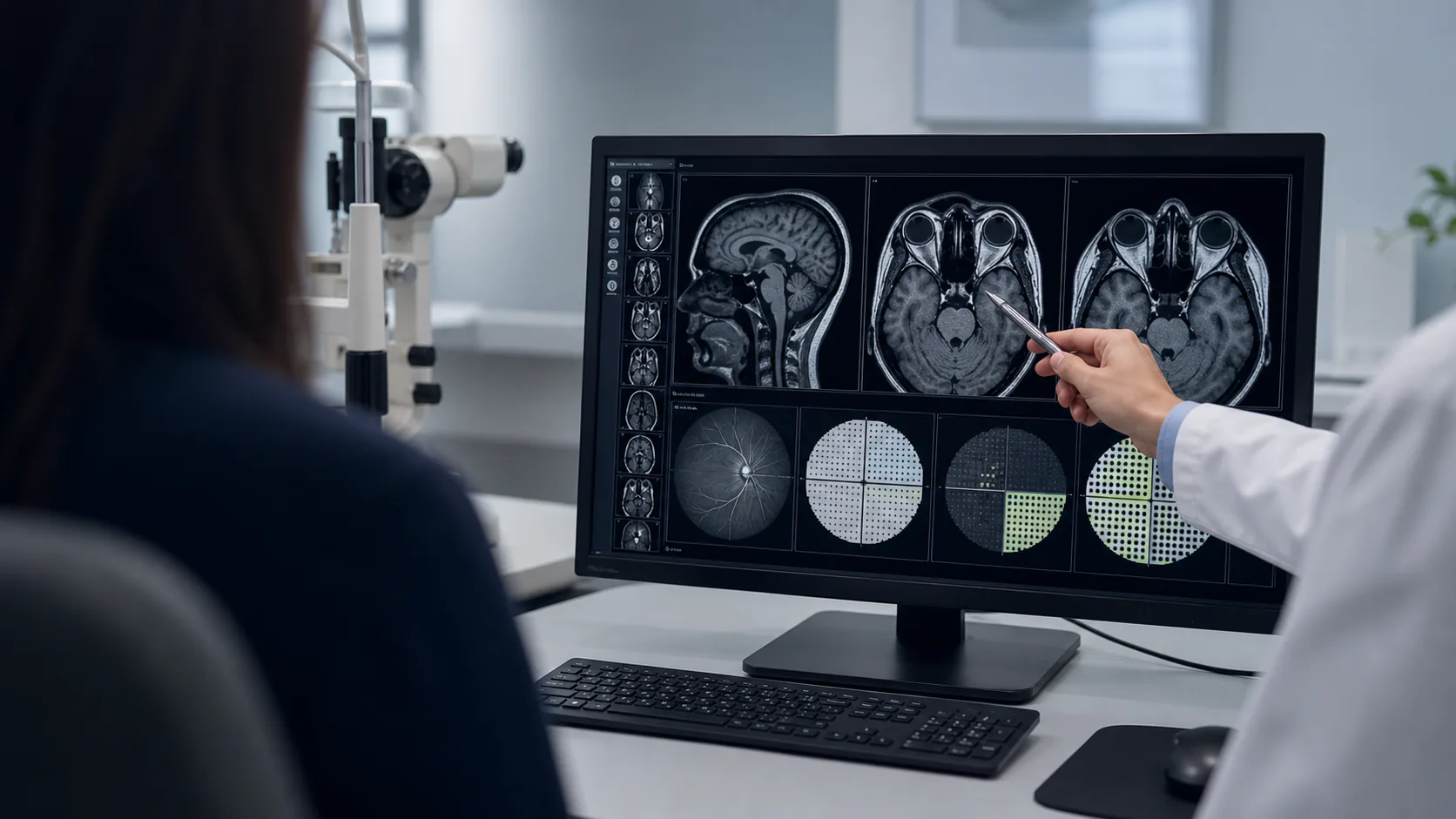
The examination is paired with targeted testing such as automated visual field testing and optical coherence tomography (OCT) of the optic nerve and retina.
- When needed
Advanced imaging
While we don’t perform MRI or CT scans on-site, we have strong referral networks with top radiology centers and collaborate closely with local facilities to arrange the scans, which provide a detailed view of brain and orbital structures.
- Treatment
An individualized plan
Treatment options are highly individualized, depending on the underlying cause. Care ranges from medical management of optic nerve disease to Botox for hemifacial spasm and blepharospasm, and adult strabismus surgery for persistent double vision.
Second Opinions & Records
Help us see the whole clinical picture
Hashemi Eye Care offers second-opinion consultations. Contact the office to confirm which records are needed and whether an in-person or telehealth visit is appropriate.
- Recent ophthalmology, neurology, or primary-care notes
- Prior visual field and OCT reports, when available
- Imaging reports and access instructions for relevant scans
- A current medication list and the question you need answered
Neuro-ophthalmology visits are generally billed through medical insurance rather than routine vision benefits.
A physician referral is not always required, but some insurance plans require referral paperwork.
Benefits, deductibles, referrals, and out-of-pocket costs vary by plan. Call before the visit to verify participation and required authorization; the office can provide a self-pay estimate when coverage is unavailable or out of network. Imaging or testing ordered outside the practice may be billed separately.
For Referring Clinicians
Coordinate a neuro-ophthalmology referral
Use our clinician resource for referral criteria, the records checklist, urgency guidance, and direct phone and fax details. No patient records are collected through the website.
Your Encino Visit
Directions and local visit details
Hashemi Eye Care is at 16542 Ventura Blvd #515, Encino, CA 91436. Office hours are Monday-Friday, 8am-5pm.
Serving patients in Encino, Los Angeles, Sherman Oaks, Tarzana, Calabasas, Woodland Hills, Studio City, Burbank, Glendale, Pasadena, and the greater San Fernando Valley.
Open directions (opens in new tab) or review parking and access details before your consultation.
Common Questions
Frequently asked questions
How is Neuro-Ophthalmology different from regular Ophthalmology?
While general ophthalmologists focus on eye health and vision correction, neuro-ophthalmologists specialize in complex visual disorders related to the brain and nervous system. They diagnose conditions that affect eye movement, optic nerves, and visual pathways, often requiring neurological evaluations.
Do I need a referral to see a Neuro-Ophthalmologist?
A physician referral is not always required, but some insurance plans require referral paperwork. For non-emergency unexplained symptoms such as persistent double vision or abnormal eye movements, you can contact us directly. The website and contact form do not replace emergency care. For sudden vision loss, severe eye pain, or stroke-like symptoms, call 911 or go to the nearest emergency department.
What should I expect during my appointment?
Expect a comprehensive evaluation, where we thoroughly review your medical history, perform advanced eye exams, and collaborate with specialists in neurology or other fields. We are known for handling complex cases, so we take a detailed, personalized approach to ensure accurate diagnosis and treatment.
Learn More
Patient resources
Next Step
Struggling to get answers about your vision?
Request a consultation at our Encino office. Many of our patients arrive after seeing multiple specialists; uncovering the root cause is what we do.